A telecom pedestal enclosure provides a set of critical protections on the infrastructure that keeps us connected in the modern world. Cable, telephone, or fiber optic network: These enclosures serve as hidden shields protecting those precious pieces of equipment from environmental elements and possible abuse. In telecommunications, broadband deployment, or infrastructure management, one must realize the telecom pedestal enclosure’s purpose, working, and benefits. In this article, we will study the importance of telecom pedestal enclosures in network reliability and why they are indispensable in today’s communication realm. Stay with us as we explore how these tiny giants allow an uninterrupted life of connectivity that braves the unforgiving elements.
Understanding Telecom Pedestals
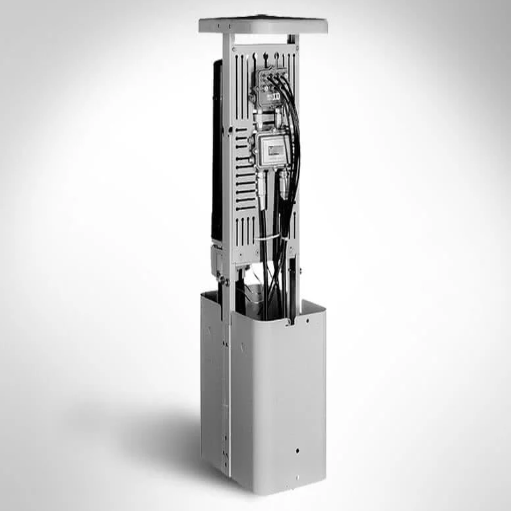
What are the telephone and communication distribution pedestals? Telecom pedestals are protective enclosures that organize and secure all telecommunications equipment, such as cables, connectors, and splices, interfacing with different services at ground level. They provide an essential access point for technicians to maintain and repair equipment. Designed to withstand environmental conditions, telecom pedestals support the reliability and durability of the network infrastructure. They ensure uninterrupted connectivity wherever underground and overhead cable routes meet.
What is a Telecom Pedestal?
A telecom pedestal is a ground-level enclosure for housing and protecting telecom equipment, such as cables, connectors, and splices. These pedestals are of utmost importance in laying down cable networks, serving as pivotal access points during installation and maintenance. Generally constructed of heavy-duty plastic or aluminum, telecom pedestals are engineered for weather resistance, being subjected to extreme environmental conditions, UV rays, and physical impacts.
According to the latest trade updates, telecom pedestals are essential for both conventional copper and modern fiber optic infrastructure. Because of the high demand for high-speed internet and data services, fiber optic networks have been skyrocketing in number. Most of these telecom pedestals now come with configurations that allow for the smooth integration of fiber optic connections alongside legacy copper networks, ensuring both performance and flexibility.
According to data from the Fiber Broadband Association, fiber deployment in the United States has reached over 63 million homes as of 2023. Such a soaring figure stresses the importance of solid infrastructure, like telecom pedestals, to hold connections firmly and provide a reliable means for communication. Moreover, these pedestals allow for scaling, i.e., for network expansion, as demand increases in residential, commercial, and rural areas.
In totality, telecom pedestals form a significant part of telecom networks, ensuring the durability, reliability, and easy access to ongoing maintenance required to keep people and businesses in an increasingly digital world.
Types of Pedestals: Cable, Telephone, and Fiber
Cable, telephone, and fiber pedestals are divided into fiber, copper, coaxial, and multi-purpose pedestals, each meant for specific network distribution tasks.
|
Type |
Material |
Use Case |
|---|---|---|
|
Fiber |
Non-metallic |
Fiber networks |
|
Copper |
Galvanized steel |
Copper splicing |
|
Coaxial |
Plastic/metal |
Cable TV |
|
Multi-purpose |
Mixed materials |
Versatile setups |
Key Features of Telecom Pedestals
- Durability and Weather Resistance
Telecom pedestals are made to bear the most adverse environmental conditions, including extreme temperatures, rain, snow, and UV exposure. Their sturdy construction, usually employing corrosion-resistant materials such as heavy-duty plastic or galvanized steel, accentuates longevity and serviceability.
- Ease of Installation and Maintenance
These pedestals are prepared for rapid setup and easy access. Removable covers, ample internal space, and pre-configured mounting options make installation and regular maintenance a breeze, thus reducing downtime for repairs or upgrades.
- Scalability and Flexibility
Telecom pedestals accommodate various types of networks, from conventional copper cabling to modern fiber optic lines. Their modular configuration allows for expansions, satisfying growing requirements regarding the network’s capacity and coverage.
- Cable Management Systems
The in-built cable retention features, brackets, clamps, and tie-down facilities enhance the arrangement of cables. This dramatically lowers the risks of damage, tangling, or signal interference, thus ensuring smooth network operations.
- Security Features
Lockable enclosures, tamper-deterrent designs, and the use of hardened materials ensure the high security of sensitive equipment and connections, protecting the network against unauthorized access and vandalism.
Importance of Distribution Pedestals in Communication Networks

Distribution pedestals are essential for the proper function and reliability of communication networks. They provide a central point for cable connections, installations, or terminations where the continuous data flow occurs. Pedestals typically protect the cables and equipment from weather conditions that may lead to damage or wear, thus minimizing the risk of outages or disturbances. Because the design usually combines security with accessibility, vermin or sabotage cannot easily interfere with the work. At the same time, maintenance and troubleshooting can be swiftly carried out during network disruptions if and when required.
Ensuring Network Reliability with Pedestals
The pedestal supports reliability in the communication network by providing a regulated environment for cable management. According to new data and technology insight, the improvements in the pedestal designs include reinforcement against environmental wear, climate-resistant materials, and innovative locking mechanisms to thwart tampering or unauthorized access. These upgrades address network providers’ challenges with installations exposed to environmental and security concerns, thus increasing service uptime and quality. A modern design featuring durability and accessibility efficiently protects communication infrastructure in the inner city and the countryside.
The Role of Enclosures in Protecting Equipment
Enclosures are used as protective routing of sensitive equipment from hostile environmental conditions, damaging machinery, and unauthorized access. Modern enclosures are rated to strict industrial standards for resistance against any ingress of moisture, dust, and temperature variations. Recent data clearly show that through the adoption of modern materials, including corrosion-resistant metals and high-grade plastics, the days of the traditional enclosure with low mechanical performance are over. Also, most enclosures are fitted with ventilation systems and may be well insulated to maintain an optimum temperature for all internal components under different conditions. By providing this controlled environment, these protective enclosures extend the life of the equipment while ensuring its uninterrupted operation even under the harshest conditions.
Benefits of Using Fiber Pedestals
- Durability and Protection
Fiber pedestals tend to be constructed using durable materials such as corrosion-resistant metals and reinforced plastics, giving them longevity even under harsh environmental conditions like extreme temperatures and moisture.
- Better Organization
These structures provide neatly organized homes and enclosures for fiber optic equipment and prevent disturbances or damaging incidents to the network during maintenance.
- Quick Maintenance Access
A removable cover plus a roomy interior aids quick and easy access for technicians, enabling repairs and upgrades with the least downtime.
- Thermal Management
Some fiber pedestals are equipped with ventilation and insulation to protect the internal components and maintain their performance even under changing environmental conditions.
- Scalable Propagation
Fiber pedestals’ modular construction allows upgrades and expansions later, making them perfect for fast-growing network infrastructures.
Applications of Pedestals in Modern Infrastructure
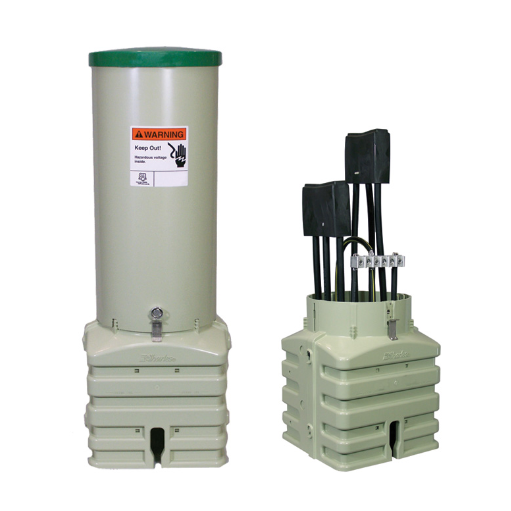
Fiber pedestals are a type of box structure used to install fiber optic connections. Therefore, they are typically deployed with high-speed Internet offerings to facilitate fiber distribution at homes, offices, and industries. Being outdoors and subjected to weather conditions, the pedestals ensure the reliability of the backbone and are built to withstand the effects of nature and human disturbances. They also allow for maintenance and upgrades to proceed smoothly, thus supporting network scaling requirements in line with growing demand.
Outdoor Installations and Their Requirements
Outdoor installations require proper planning with a strong infrastructure to withstand environmental challenges. It must be weatherproof, resisting extreme temperature changes, moisture, and UV exposure. Materials used should be of such a nature as to last for years under outdoor conditions without corroding. Proper grounding and surge protectors are also must-haves to keep the network steady against any electrical disturbances, like lightning strikes. The installation should have network access provisions for routine maintenance, allowing upgrades or repairs to be made quickly and easily. This completes the catalog of requirements that assure the reliability and longevity of installations to support today’s connectivity demands.
Telecom Pedestals in Data Centers
Telecom pedestals impregnable to weather in data centers are attached to the cable infrastructure behind the pedestals and form a cable management environment that causes the least possible downtime while providing the best network performance and scalability for data through the system’s center. They bring a great deal of upkeep and evolution to any workable physicist without causing them to cease being in demand for good telecom pedestals.
Integrating Splice and Rack Solutions
Integrating splice and rack solutions is essential in modern data centers, where fiber management and scalability cannot be compromised. Splice trays and fiber management modules can hold thousands of fiber connections in one rack, thus providing the finest space while ensuring the setup remains uncluttered and accessible. As per recent industry studies, high-density fiber racks are a breakthrough in connectivity as they can accommodate up to 3,456 fibers within a 4RU (Rack Unit) chassis, thereby maximizing the utilization of small spaces.
In the presence of splice solutions along with rack systems, the signal transmission quality improves, minimizing any chances of failure. Fusion splicing, generally practiced, results in minimal signal loss and ensures excellent reliability, with the average splice loss being less than 0.02 dB, as stated by reputed fiber optic manufacturers. Pre-terminated splice cassettes, mainly when used with rack systems, can cut down deployment time by 70%, bringing ease to deployment and lowering operational costs.
This smooth integration of splice and rack systems allows networks to optimally handle increased data requirements generated from applications in 5G, IoT, and large-scale cloud developments. Being modular in nature and configuration, these solutions offer scalability for data centers so that they can always upgrade their existing setup with a few additions, thus securing their future along with informed present-day applications concerning reliability and efficiency.
Materials and Construction of Telecom Enclosures
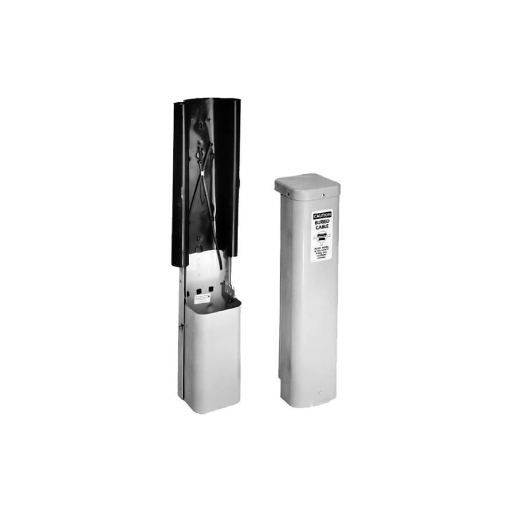
Telecom enclosures are usually constructed using stainless steel, aluminum, and reinforced plastics to shield sensitive equipment from environmental factors such as moisture, dust, temperature extremes, etc. These materials are selected because of their strength and corrosion-resistance properties. Additional design features are installed in these enclosures, including weather seals, ventilation systems, and locking mechanisms to safeguard the equipment under any condition. With a choice of solid materials and careful design, the telecom enclosure ensures that the communication structure will be protected for a long time.
Choosing Between Steel and Metal Enclosures
When deciding between steel and aluminum enclosures, it boils down to your application’s specific requirements. Steel enclosures are known for their strength and durability and are objects of interest in locations where impact resistance and structural integrity are priorities. They withstand abuse and harsh environments but might require coatings to prevent corrosion over time.
Conversely, aluminum enclosures are much lighter and inherently corrosion-resistant due to the formation of an oxide layer. Thus, aluminum enclosures are used in cases where installations are outside or where humidity is high, and the weight of the structure plus resistance against rust is a concern. In addition, aluminum can be a good conductor of heat, thus serving as a good means of dissipating heat from electronic systems.
Since both materials have advantages and disadvantages, factors like price, exposure to the environment, weight constraints, and longevity should be weighed carefully before one can decide which is the best fit for his or her enclosure needs.
Durability and Weather Resistance
In terms of durability and weather resistance, both materials bear distinct advantages. Aluminum has an oxide layer, which renders it corrosion resistant in general atmospheres. Still, it can be at odds with attack in highly acidic or alkaline environments. Stainless steel, particularly grades such as 316 stainless steel, can withstand corrosion even in the most severe conditions, particularly when the marine environment involves exposure to salt water.
Stainless steel also weighs in on strength, resisting dents, scratches, and other damage with time. Aluminum comes to prove its capabilities, where weight is of paramount concern, though it weighs much less than stainless steel. Considering the weather and mechanical stresses it is subjected to will guide you in deciding what material will outlast time in your application.
Locking Mechanisms for Security
Locking mechanisms protect personal belongings, property, or confidential information. Different locking mechanisms are used depending on the security level required and the application. Traditional ones like pin tumbler locks are always preferred in residential and commercial areas due to their efficiency and simplicity. However, with advancements in modern technology, more intricate solutions are being put forward, such as smart locks, which can be operated remotely from a smartphone or integrated into home automation solutions. Biometric locks allow security to be taken a step further, whereby the people whose fingerprints or faces are recognized are authorized to gain access.
At the highest level of protection, the mechanical lock can be used as a primary lockdown or complemented with some other type of electronic or biometric solution for a multi-layered defense, which reduces vulnerabilities and increases security.
Future Trends in Telecom Pedestal Design
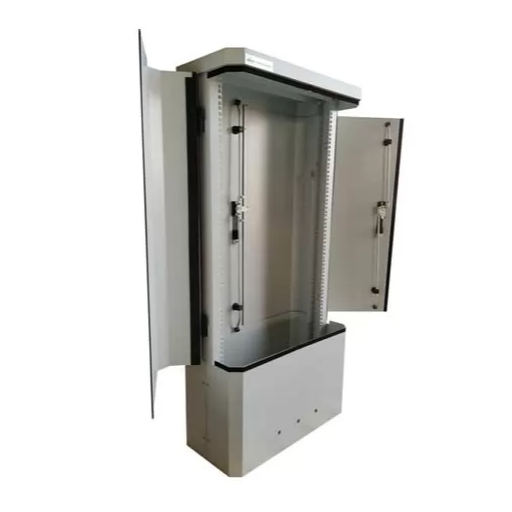
Future trends in telecom pedestal design refer to improving their durability, accessibility, adaptation to evolving technologies, etc. Materials with improved weather resistance are being developed to last longer in harsh environments. Designs are being prepared to allow for better installation and maintenance to reduce labor costs and downtime. On the other hand, next-generation innovative pedestal systems equipped with sensors and monitoring capabilities will be able to provide real-time data relative to performance and warn about arising issues. These developments are meant to sustain modern communication demands while still ensuring high reliability and efficiency.
Advancements in Fiber Optic Technology
Fiber optics technology has recently become a major player across the telecommunications spectrum, pushed by increasing demands for faster and more reliable data transmission. One of the great strides in this field has been the development of multicore fibers to support higher data rates and larger bandwidths. According to recent studies, multicore fiber technology has the potential to increase capacity by up to 100 times compared to traditional single-core fibers.
Another aspect involves using hollow-core fibers with less light scattering and latency courtesy of the air-filled core. These are used in ultra-low latency applications in high-frequency trading systems and advanced scientific research. Meanwhile, developments in bend-insensitive fibers provide higher-level performance in compact design, thus easing deployment in urban environments and in tight spaces.
On the materials end, however, work is going into producing ultra-pure glass and innovative manufacturing processes to minimize attenuation and maximize efficiency over very long distances, thus going beyond transmission of, say, 100 Gbps over thousands of kilometers. Furthermore, AI-based fiber monitoring systems have begun to spread their wings and provide real-time updates on the infrastructure for drawing issues before they blossom into outages.
The fiber optic market curve is expected to rise at a CAGR of 8.5% from 2023 to 2030, propelled by increased internet penetration levels, the rollout of 5G networks, and demand for high-speed data transmission in developing economies. These innovations in fiber optic technology enable the technological infrastructure of tomorrow, helping to nurture the realization of smart cities, fast connectivity, and a globally connected world.
Smart Features and Automation in Pedestals
Smart pedestals with cutting-edge features and automation offer ever-increasing functionality and efficiency for infrastructure. Designed to match the contemporary ethos of connectivity, sustainability, and streamlined working, some of the innovative features incorporated into pedestals are as follows:
- Remote Monitoring and Diagnostics
Furnished with IoT sensors, remote procedures allow the monitoring of the smart pedestal’s status in real time, facilitating remote diagnostics and preventive maintenance to minimize downtime.
- Energy-Efficient Systems
Power management operation to control energy usage, i.e., energy-efficient LEDs with power shut-off when not active.
- Integrated Connectivity
Advanced interfaces have constraints for 5G and WiFi support, granting boundless internet access and communication for any device connected.
- Contactless Payments
These pedestals support cashless and contactless payment modes such as NFC, QR code, etc., improving user experience and transaction speed.
- Environmental Monitoring Sensors
Some pedestals offer environmental monitoring sensors, which measure air quality, temperature, and noise levels. Thus, they bring a level of smarts to city administration and sustainability.
Environmental Considerations for Telecom Infrastructure
Environmental factors and telecom infrastructure go hand in hand. Meanwhile, solar and wind energy applications are the two developments that keep modern-day progress in favor of sustainability. The design solutions for telecom sites aim to cut down on carbon emissions. Then, energy conservation design philosophies emphasize minimizing energy usage through hardware and systems, including energy-efficient cooling methods and low-energy-use network apparatus. Recycling and disposing of obsolete equipment would be crucial steps in reducing e-waste. Together, these measures and ongoing innovations in their field testify to the industry’s intention to curb technological developments with some degree of environmental responsibility.
Reference Sources
- Mobile Home Parks and Disasters: Understanding Risk to the Third Housing Type in the United States
- Authors: Andrew Rumbach et al.
- Publication Date: May 1, 2020
- Journal: Natural Hazards Review
- Citation Token: (Rumbach et al., 2020)
Summary:
- Objective: This study examines the risks faced by mobile home parks (MHPs) in the context of disasters, which can include communication disruptions during emergencies.
- Methodology: The authors reviewed existing literature and data on MHPs, focusing on their vulnerabilities to natural disasters and the implications for communication infrastructure.
- Key Findings: The research highlights that MHPs are often overlooked in disaster planning, leading to significant resident risks, including potential communication failures during emergencies. The study emphasizes improving infrastructure and communication systems in MHPs to enhance resilience.
- Manufactured Insecurity: Mobile Home Parks and Americans’ Tenuous Right to Place
- Author: Esther Sullivan
- Publication Date: 2020
- Journal: Contemporary Sociology
- Citation Token: (Becher, 2020, pp. 303–305)
Summary:
- Objective: This work explores the socio-political dynamics of mobile home parks, including the implications for residents’ access to essential services like communication.
- Methodology: The author employs qualitative research methods, including interviews and case studies, to analyze the experiences of mobile home park residents.
- Key Findings: The study reveals that residents often face barriers to accessing reliable communication services, which are critical during emergencies. The findings suggest that policy changes are needed to ensure equitable access to communication infrastructure in mobile home parks.
- “Trailer Trash” Stigma and Belonging in Florida Mobile Home Parks
- Author: Margarethe Kusenbach
- Publication Date: February 27, 2020
- Journal: Social Inclusion
- Citation Token: (Kusenbach, 2020, pp. 66–75)
Summary:
- Objective: This article examines the stigma associated with living in mobile home parks and its impact on residents’ sense of belonging, which can affect their access to communication resources.
- Methodology: The author interviewed residents to understand their experiences and perceptions regarding stigma and community.
- Key Findings: The study highlights that stigma can lead to social isolation and hinder residents’ ability to advocate for better communication services. The findings underscore the importance of addressing social perceptions to improve access to essential services in mobile home parks.
- Top Commercial Power Pedestals Manufacturer And Supplier In China
Frequently Asked Questions (FAQs)
What are telephone and communication distribution pedestals?
Telephone and communication distribution pedestals are structures that house and protect distribution equipment used in the telephone and communication industries. They serve as critical components in the infrastructure that supports fiber-to-the-home (FTTH) networks, ensuring reliable connectivity for service providers and their customers.
How do distribution pedestals protect distribution equipment?
Distribution pedestals house and protect various types of communication equipment, shielding them from environmental factors such as moisture, dust, and physical damage. This protection is vital for maintaining the integrity and functionality of the equipment, especially in outdoor settings where conditions can be unpredictable.
Can I customize a telephone pedestal for my specific needs?
Yes, telephone pedestals can be customized to meet specific requirements. Manufacturers often offer options to modify the size, configuration, and additional features, such as battery backups or expanded-capacity designs, ensuring that the pedestal aligns with service providers’ unique needs.
What is the significance of using an expanded-capacity direct buried base?
An expanded-capacity direct buried base is significant because it allows for the installation of additional equipment without the need for extensive excavation or structural changes. This feature is particularly beneficial for growing networks that require more capacity while ensuring that the distribution equipment remains protected and accessible.
How does a cable pedestal support FTTH installations?
A cable pedestal is essential in FTTH installations as it is where fiber cables are terminated and distributed. It helps manage the fiber drop pallets and ensures that the connections are reliable, which is crucial for maintaining high-speed internet services for customers.
What materials are commonly used in manufacturing telephone and communication distribution pedestals?
Telephone and communication distribution pedestals are typically made from durable materials such as high-density polyethylene or metal, which offer superior protection against the elements. Metal brackets may also be incorporated to enhance structural integrity, ensuring the pedestal withstands harsh environmental conditions.
What role do battery backups play in distribution pedestals?
Battery backups in distribution pedestals play a crucial role by providing an uninterrupted power supply during power outages or interruptions. This feature ensures that the communication network remains operational, minimizing downtime and maintaining customer connectivity.
Why should I select a reliable supply chain partner for my distribution pedestal needs?
Selecting a reliable supply chain partner for distribution pedestal needs is essential for ensuring you receive high-quality products and timely delivery. A dependable partner will offer superior customer service, expert advice, and a range of options that can be tailored to fit the specific requirements of your telecommunications project.