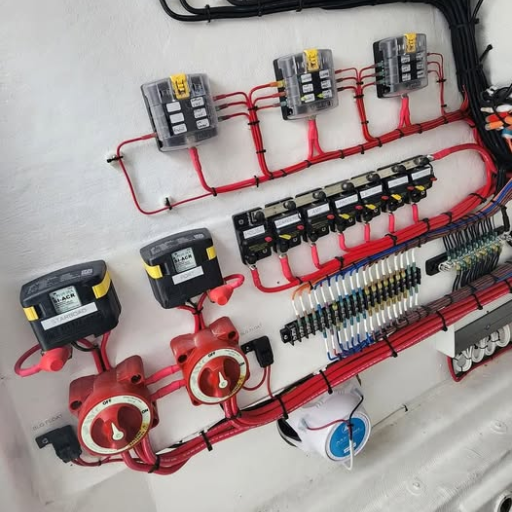
Navigation upon the open seas relies on more than the skilled handling of the wheel and the possession of a well-made craft; it depends on having a dependable and efficient power distribution system. Within the complexity of the marine vessel, the power-distribution system—a system of fuses and panels—acts as the backbone for maintaining the operations that are most important to safety. This article has been prepared to explain the key components of the marine power distribution, such as the system’s design and functions, the role fuses have in safety, and how panels can give operators the possibility to have reflexive control. These are traits that, whether more or less, pertain to anyone wishing to launch a waterborne life in either a totally enterprising or casual way. Now, here is why you should come and get enlightened about the fundamentals of marine power distribution systems in relevance to your vessel.
Key Takeaway
A well-designed marine power distribution system is the critical backbone of vessel safety, regulating everything from basic lighting to complex propulsion while protecting the crew from electrical hazards.
Understanding Marine Power Distribution Systems
Overview of Marine Power Distribution
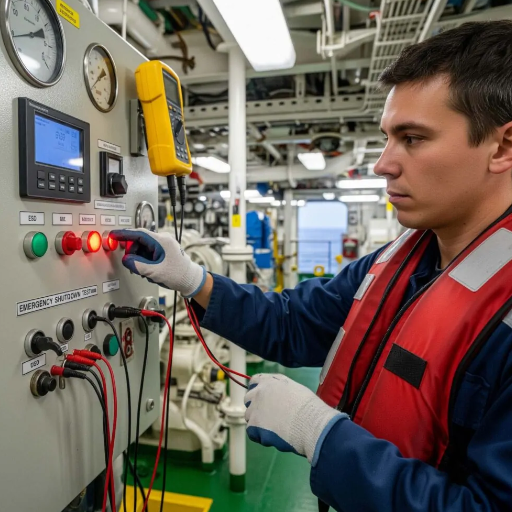
Marine power distribution systems are designed to regulate the controlled flow of electrical energy across a vessel, ensuring the efficient and safe performance of all onboard equipment. They are vital for the recovery in the performance of a multitude of marine equipment, ranging from common lighting and navigation assets to sophisticated communication and propulsion systems. The ultimate objective is to supply power while ensuring that it should be reliable and adaptable, matching the requirements of vessels of any size or purpose.
The main element of electrical power distribution is an electrical panel for marine use, which bears the responsibility of distributing and regulating electric energy. In consequence, the panel is mainly tasked with appropriately delivering the power, produced from shore power, generator sources, or battery reserves, toward various parts of the ship. This is crucial since it has built-in circuit breakers and other protection devices to prevent or limit overloading and/or faults that may result in electrical hazards and fire. It is guaranteed that power is distributed to the right places, looking after the functions of the vessel.
Safety is another critical aspect of marine power distribution. Designing a functioning system not only reduces the hazards associated with electrical fire, short circuits and equipment failure but also includes safety measures such as grounding, fuses, and isolation mechanisms for the protection of the vessel and the crew. A reliable distribution system can contribute to the efficiency of operations by taking the complexity of marine electrical systems off your shoulders, ensuring that all your time spent on the water remains calm, comfortable and unburdened.
Key Components of the System
The marine electrical power distribution system typically comprises a main switchboard, circuit breakers, transformers, and distribution panels. The first component manages system-generated power and distributes it to specified subsystems. With the backing of circuit breakers, crucial protection would be provided against circuitry distress caused by overloads or power spikes.
Transformers enable the voltage from generated power to be regulated for different levels of requirements in a range of applications while maintaining continuity and compatibility among several onboard systems. Distribution panels take electricity from source level to something capacity screens, pumps, PLCs, etc., ensuring maximum efficiency with minimum pushed electrons all over the ship, maintaining the ship as organized as an electrical system allows against need.
Other safety features also are integral elements of any marine electrical system. These include the grounding or earth system, residual current devices (RCDs), and emergency power supplies. The grounding of the system protects it from accidental contact with a live current, while residual current devices detect and stop faults. Emergency power supplies include secondary power generation by a backup generator, a source of increased power supply during power failure. These features, although employed for different purposes, work together to enhance the safety, reliability, and operational efficiency of the marine electrical system.
Importance of Electrical Distribution in Marine Applications
Electrical distribution plays a very important role in the marine applications whereby the power is equitably distributed reliably to all the essential systems onboard. Be it a propulsion system, navigation, communication, a generator or other equipment, an effective and meticulously planned-out electrical distribution system is a prerequisite for the proper functioning of the marine vessels. Given the importance of this system, operational instability may occur and would impair crew and passenger safety and possibly result in costly delays and losses.
A strong electrical network secures safety through preventing power outages and reducing the likelihood of electrical faults. Advanced protective measures, such as circuit breakers and residual current devices, serve to quickly register and isolate faults, hence cutting down accident risks and equipment destruction. This becomes extremely crucial for marine operating environments, where adverse conditions and the presence of water further complicate electrical operations.
💡
Pro Tip
Always ensure your distribution system is designed to handle “essential loads” separately from “non-essential loads” to maintain critical navigation and safety functions during power fluctuations.
In addition, an efficient electrical distribution system in designated environments works to maximize energy use and encourage the integration of green, energy-efficient technologies. With this system, it is feasible to reduce energy waste or even employ energy from renewable sources. This is in answer to the increased emphasis on sustainable measures to reduce carbon emissions within the shipping industry and demonstrate compliance with international environmental standards, thereby enhancing the general operational efficiency of a ship.
Types of Distribution Panels
Standard Marine Distribution Panels
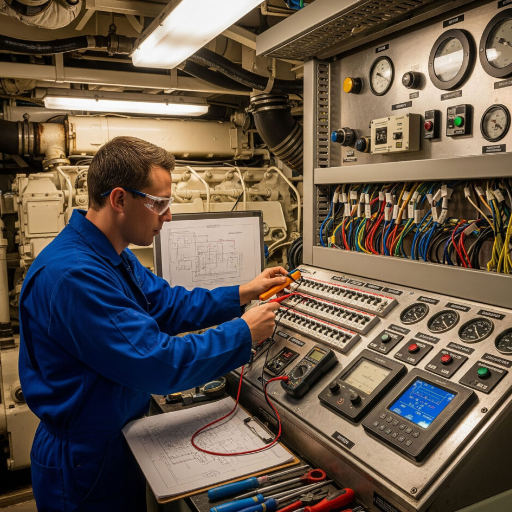
Standard Marine Distribution Panels are highly essential components in the correct management of the distribution of electrical power around a ship safely and efficiently. These panels are specifically designed to support the intricate behind-the-scenes electrical needs of marine environments, in order to ensure smooth and continuous operation of critical systems. They act like a central hub, where power from generators or other sources is divided and delivered to various onboard systems and subsystems.
Marine distribution panels have tougher marine versatility tests in terms of sustainability against any environment-altitude, the effect of moisture, the vibrations, and the fluctuation of temperature. They are predominantly worked with strong and rust-proof materials to recognize durability and ensure performance and safety in an adverse marine environment. To best prevent damage to equipment from electrical faults, such as overloads or short circuits, they hold circuit breakers and fuses.
An effective allowance is also made in the use of these panels while emphasizing safety concerns. The labeling, the layouts maintained, and the compliance with marine electrical standard demand that the operational personnel can have an accessible, safe setup in place and have adequate operation and maintenance to complete the necessary tasks in an un-risky manner. Electric distribution remains a very important aspect made up from standalone marine distribution panels, under all circumstances to ensure good operation functioning and vessel safety.
Advanced Distribution Panels
Maintenance of an efficient and safe electrical system onboard a ship is crucial, with advanced distribution panels being its critical component. These panels perform power distribution from one sub-system to another for better stability or reliability in the most challenging marine environments. Always designed keeping safety and convenience of use in mind, these panels disallow overloads, short circuits, and other electrical anomalies from affecting the boat’s operation or security thereof.
Integrating highly elaborate monitoring & control systems sings the major praises of advanced distribution panels. These systems are instrumental in monitoring power distribution in real-time and single out problems that may need intervention. This maintains considerable productivity as downtime lessens while the working and current handling capacities of these panels are maintained in strict adherence to countless standards that lay down the principles for maritime electrical regulations and safe working on board.
Installation and maintenance are particularly crucial to the functionality of sophisticated distribution panels. Regular inspections along with the schedule for timely maintenance enable early detection of any potential, becoming a fault to minimize mammoth issues. Properly readable labels and arrangements in these panels make it easy for the operators to access and use them, succoring the utmost possible safe operation in routine as well as emergency conditions.
Fuses and Circuit Breakers in Marine Power Systems

Functionality of Marine Fuses
The Marine fuses are essential for securing electrical systems onboard marine vessels from thermal overloading or damages resulting from short circuits. With such mechanisms, the fuses successfully break the circuit while the current surpasses a certain point of capacity, in order to prevent potential interferences with the essential circuits and to mitigate fire hazards. Used as an easy and at times invaluable safety valve against harsh and demanding conditions at sea, the marine fuses give an extended level of defense.
Operational principles of a marine fuse are very easy to understand—a metal conductor inside a glass cylinder melts, which cuts off the current flow in response to high voltage. By this simple operation, they prevent further damage by isolating the fault and thereby disengaging the circuit. The configuration of every fuse is fixed according to its current and voltage limits, which greatly helps these fuses work well again for the particular circuit it has to protect. Proper selection and good installation is very essential for maintaining the load capacity of the fuses.
Finally, marine fuses find very much importance when maintaining life-cycle serviceability of systems working under areas such as high humidity, salt exposure, and vibration environments. Single designs with applications available in all marine distribution panels enable them to fit into initial designs without any serious complications. Properly maintaining their load capacity, as well as periodic condition assessments promptly, will engage their function to be consistently applied for fold current generation on-board.
Types of Circuit Breakers Used in Marine Applications
The types of circuit breakers employed differ in numerous ways, but one very significant point must be that such units must indeed be able to withstand the harsh and often difficult aftereffects experienced while working in such demanding areas, say marine applications. Many categories then come into play just to meet special operational and safety demands in marine power systems.
| Breaker Type | Primary Function | Best For |
|---|---|---|
| Thermal-Magnetic | Protects against short circuits and prolonged overcurrent. | Auxiliary systems and distribution panels. |
| Hydraulic-Magnetic | Consistent trip performance regardless of ambient temperature. | Environments with high temperature fluctuations. |
| Residual Current (RCCB/GFCI) | Senses minute current imbalances to prevent shock and fire. | Bathrooms, galleys, and open deck areas. |
Choosing the Right Fuse and Breaker for Your System
Select the right fuse/breaker for your system to guarantee its safety and efficiency. Fuses are designed to protect the system against an overcurrent by melting the fuse link or breaking the circuit when the overcurrent is reached. Circuit breakers are similar; they also can easily be reset, so can be reused. Hence, one should select a proper rating of fuse or breaker to match the expected supplied-load of a circuit, so the maximum current does not exceed the device’s threshold.
The first step was to determine the total load of the circuit, everything connected and on. One has to consider that the current ratings of the breaker or fuse should be slightly higher than the total load but only to a certain point, so that they trip or blow immediately at a fault. For example, if the total circuit load is 15 amps, a 16 or 20-amp breaker would be fine or not. Determine it according to the type of circuit and wiring involved. Also, ensure to check the voltage rating, so as to make sure the breaker or fuse is compatible with the system to be protected.
An individual needs to be considerate of the environmental conditions that climatically affect where a fuse or breaker is chosen to be installed. In systems whose exposure to moist surroundings is more likely, like the marine cavity and mimic groups of bathroom occupancy, an RCCB offering electric shock protection is advised. Furthermore, check to see if the devices that you choose from are compliant with the latest regional safety regulations and standards. This will ensure your smooth and compliant operations.
Applications of Marine Power Distribution

Power Distribution in Commercial Vessels
Power distribution in commercial ships is a crucial element of ensuring the safe and efficient operation of such facilities. The vessels must be supported by reliable power systems that can operate a variety of equipment used for navigation, communication, propulsion, and comforts of the crew on board. The distribution system design should reflect the vessel’s size and operational requirements, whilst supporting dissimilar types of electrical loads to ensure regular power supply for essential loads and nonessential loads alike.
The almost established approach to commercial shipping power distribution systems consists of a switchboard, transformer(s), circuit breaker(s), and arranged distribution panel(s). Such design requirements of such elements have large power handling capabilities and ensure complete protection from the onset of electrical faults, overloads, and short circuits. Redundant systems are sometimes incorporated as well for the primary electrical distribution systems to ensure that there will be no power when it matters most, such as engine control or emergency lighting.
Safety standards that are prevalent under the aegis of international laws, for instance, the International Maritime Organization (IMO) related to the design, maintenance, and construction of marine power distribution systems, have a significant impact on the quality of marine power distribution systems. Regular checks, adequate maintenance practices, and adherence to safety protocols are necessary to enhance the durability and detectiveness of electrical systems on board. By implementing these safety measures, commercial ships can conduct their operations effectively and foremostly ensure the safety of their crew and passengers.
Marine Power Systems for Recreational Boats
Marine power systems for recreational boats are pretty important for the smooth running of the boat and, therefore, the safety of the crew and passengers. These power systems were concocted to provide electric power to all systems onboard the boat—from navigation lights, to GPS, to the communication system, video, and audio equipment. Normally, they get their power from the onboard batteries. That’s why some even opt for alternators and generators to ensure uninterrupted power to the boat for all activities. The resultant duties are cruising, water sports, and even fishing.
An everyday marine power system for recreational boats would, therefore, be one that incorporated a DC and an AC circuit. The DC system would power such basic functions as lighting systems or navigation electronics. Usually, larger appliances such as refrigerators, air-conditioners, or entertainment systems are run on the AC system instead. To maintain steady power, most recreational boats also include an inverter that would convert battery-stored DC to AC power when necessary.
It is necessary that our systems stay in good shape, and so they need to be subject to regular testing for those conditions that will whiten or blister the metal, loosening the connection, and detrimental battery functions that combine to bring about untimely failure in the system. Besides, owners are allied to lay down practices that promote safety, such as installing a marine-rated lead as well as ensuring protective measures to reduce exposure to moisture and salty environment. In this manner, recreational boaters can have power systems that make good use of the power and give good outcomes if those power systems are portable and dependable. It also leads to a high level of functionality and safety.
Emerging Trends in Marine Power Distribution Technologies
The dominant trend in modern marine propulsion, aiming for zero-emissions and reduced operational noise.
In recent years, the marine industry has begun looking more seriously into power distribution technologies that are sustainable and efficient. An emerging trend in this regard is hybrid and electric propulsion systems. This system combines fuel engines operating on traditional storage with one or more electrical power sources, resulting in a reduction in fuel consumption and could add to less CO2 emissions. Reduced operation noise and reduced maintenance requirements make electric propulsion so cost-effective for being embraced by both the commercial and recreational vessel groups.
An additional noteworthy development in the shipping industry is the implementation of smart grid technologies amongst marine energy systems. These smart grids allow superior energy management through monitoring and control mechanisms of electrical power, distributed in real time. These grid systems hence optimize the usage of power, ensuring that the power is well utilized between various onboard systems. From advanced monitoring tools, any potential defect notification is envisioned before this could lead to failure, leading to better reliability and security in the coastal activities.
The notion of employing renewable energy sources—solar and wind energy—being a novel wave in the marine industry has picked up steam, now that ships and boats are increasingly being equipped with solar panels or wind turbines as additional sources of power to support traditional systems. These renewable energy options work toward reducing the burning of fossil fuels and providing a cleaner, more sustainable energy solution. With the advancing battery storage technology renewable energy systems are emerging as a realistic part of modern marine power distribution strategies.
Industry Standards and Regulations

Compliance with Marine Electrical Standards
Importance of Compliance: Marine electrical standards are primarily put in place to ensure electrical safety, reliability, and efficiency on board ships and other marine vessels. They are developed to minimize risks such as halo of an electrical fire in connection with system malfunctions or equipment failures that could compromise crew and vessel safety. Not to mention that adherence to these laws enforces embracing a corporate approach in using energy-efficient and environmentally-friendly technologies.
Key Regulations: Marine electrical standards are frequently developed and enforced by international bodies like the International Maritime Organization (IMO) and the International Electrotechnical Commission (IEC). An example is the IEC 60092 series, providing the basic guidelines of electrical installations within ships, including system design, material selection, and many safety measures while so doing. Adherence to these standards is thus paramount for the effective functioning of the electrical systems as well as for the alignment with international marine protocols.
Benefits of Adherence: Adherence to acknowledged marine-electrical standards by ship operators and brokers symbolizes commitment between quality and safety. True, compliance is the missing link to devastating and catastrophic legal liabilities, while operational disruptions and cost-reimbursement are additional pains likely to be experienced for non-compliance and system failure. Another thing to note is the compatibility factor surrounding international trade, so that many ports and international maritime jurisdictions need evidence of compliance with marine electrical standards before granting access. In reality, following said marine electrical standards ensures safer and more sustainable maritime industry.
Safety Considerations in Marine Power Distribution
Safety in the distribution of power in marine environments is essential; first and foremost, to protect humans and equipment and, secondly, to ensure prowess in the service to vessels. One of the greatest factors to this end is the prevention of electric hazards, such as short circuits, overloads, or electrical equipment failure, which could either precipitate fires or failures in power supply. Maritime systems act as a solution to the issue by adhering to a variety of safety codes and rules in the use of an electric-power system. The rules call for implementing the use of circuit breakers, earthing, or insulation within the highest permissible principles in the standards of the world.
Another vital site for the security is reliability in harsh sea conditions. Marine electrical systems are often subjected to elements in these conditions, like humidity, saltwater, vibrations, or even corrosion and equipment wear. The usage of materials that are durable or weatherproof as well as the provision of timely maintenance ensures long-lasting and safe electrical power systems in marine environment. Systems need regular inspections in order to be overhauled even at some slight fault stages and dismantle potential failures.
Protection of crew is of utmost importance. The risk of an accident is greatly reduced when the operation is in line with safe practices, including all personnel’s training and protective equipment use. The clear labeling of electrical panels along with emergency shutdown procedures further enhances safety features for rapid response in times of emergencies. The confluence of the four factors perfectly depicts how marine power distribution systems work to protect the vessel and all the people it carries.
Maintenance Protocols for Electrical Systems
- 1
Regular Inspection
Routine checks to detect early signs of wear, corrosion, or equipment damage before they lead to failure. - 2
Cleaning & Contaminant Removal
Removing dust, moisture, and salt buildup from connections and panels to prevent short circuits. - 3
Testing & Calibration
Verifying all protective devices (breakers/fuses) and calibrating instruments to ensure they operate within rated values.
It is required to see to it that electrical systems be kept at optimal functioning levels by way of maintenance, repairs, and performance upgrades. Electrical systems need regular maintenance to perform efficiently, last a long time, and above all provide safe operations; for instance, regular inspections should go a long way in detecting confirmed signs of wear, corrosion, or damage. This provides early detection of problematic systems before any catastrophe arises by enabling one to take effective corrective steps, thus maintaining the operating efficiency of the systems, and avoiding costly repairs.
Regular cleaning and maintenance of the apparatus and electric components is the next step to ensure such service. Dust, moisture, and contaminants will accumulate over time to cause short circuits or decrease system performance. Proper cleaning techniques should be used so that all connections, panels, and equipment are kept as clean as possible. Testing all protective devices like circuit breakers and fuses is crucial.
Lastly, the testing and calibration of electrical systems should also be incorporated within the calibration case. Normal tests check that all parts are within their rated values, and calibration assures workable instruments and devices. Maintenance activities must be recorded, as well as maintenance books offering evidence that work was actually performed and requirements and operational conditions were met. Reliable electrical systems are the output of finely tailored maintenance systems necessary for ensuring the higher grades of reliability and safety on board ships.
Frequently Asked Questions (FAQ)
Q: What is marine power distribution and why is it important for ships?
A: Marine power distribution is the process of directing electrical power from generators, batteries, and shore connections to the on-board electrical devices and auxiliaries that require it. It is crucial for the safety and operation of the vessel, enabling stable power to be provided according to the requirements of the electrical power applications for navigation, communication, and other essential system operations. Thus, it is imperative for designing the right marine power distribution system by a designer with experience and caliber, together with the manufacturer. This will reduce failure risks, increase efficiency, and permit client-specific integration with cost-effective components that would secure their protection against corrosion while tailoring solutions to applications that are in tune with the marine environment.
Q: What are the main elements of a typical marine power distribution system?
A: A typical marine power distribution system consists of switch panels, circuit breakers or protectors, bus blocks, distribution panels, converters/inverters, batteries, chargers, and shore power connectors. These are often offered as part of a matched set of equipment by a name brand, along with accessories like remote switches and monitoring modules. Innovative designs from manufacturers include corrosion resistance and modularity during installation and maintenance.
Q: How do I select the appropriate marine power distribution for my vessel?
A: The choice will depend on the size of the vessel, power requirements, adherence to marine standards, and the amount of customization needed. You should consult with a marine electrical engineer or manufacturer for calculations of applied load, sizing of the breaker, and protection scheme. Look for reliable brands that warrant that their product is made of materials that resist corrosion, and that provide well-documented information regarding the product. It is also advisable to ascertain whether protective enclosure and play switch accessories are available.
Q: Could the marine power distribution systems be customized to retrofit or new builds?
A: Yes, most of the manufacturers present such marine power distribution solutions that can be customized for both new builds and retrofits. It could be the arrangement of blocks, monitoring that is integrated, or the type of switches or protection devices being selected complying. Working with an experienced engineer then ensures that the customized power distribution system is designed to prescribe safety standards and allows for integration with existing electrical devices and the engine control systems.
Q: In terms of marine power supplies, what role do corrosion-resistant materials play?
A: Corrosion resistance is significant when exchanging marine power, considering that sea currents, humidity, and vibrations all speed up the degradation process. Such components as terminal blocks, busbars, connectors, and enclosures made from either treated plastics or corrosion-resistant alloys greatly reduce the obliteration process and assist in carrying out reliable electrical connections. The proper choice of corrosion-resistant components and their accessories will stand to save owners on maintenance and lengthy downtime when in service aboard ships that have to face harsh maritime circumstances.
Q: How does a protector/circuit breaker function in marine power distribution?
A: A protector or circuit breaker keeps circuits from overheating in case of an overload, short-circuit, or fault. It is usually selected for electrical devices depending on their power specifications, protecting fragile equipment and motors. Different protector types, such as thermal, manual, or electrical breakers, can be provided by manufacturers, which are usually mounted together with auxiliary switches on switch panels and distribution blocks.
Q: What is the impact of innovation on the precursors of modern marine power distribution systems?
A: Modified systems include digital monitoring and control, smart switchgears, lightweight composite enclosures, and energy-efficient converters/inverters. Popular models and manufacturers incorporate Internet-enabled sensors, remote diagnostics, and customizable control interfaces that still can be used by engineers to facilitate the most efficient power allocation. These developments result in greater safety measures, fuel savings, and the overall maintenance of the network transferring.
References
- Brief Introduction of Marine Power
This document discusses marine power systems, including tidal and wave power, and their conversion into electricity.
Read more here -
Performance of Marine Power Plants
Explores the performance of marine power plants with generators and their integration into main switchboards.
Read more here -
Electrical Power Lab for Marine Engineering Technology
Provides insights into electrical distribution systems in marine engineering, used for educational purposes.
Read more here - Top Marina power pedestals Manufacturer and Supplier in China