Electrical outlets are becoming more and more an integral part of everyday life, yet their variety may go unnoticed. From kitchen outlets to support for heavy-duty industrial applications, the differing outlets perform varied functions, each according to need. Through this blog post, you will be taught about the different types of electrical outlets as far as their designs, applications, and typical locations. Consider unification and comprehension of these various outlets from the viewpoint of an electrician or a homeowner deciding on renovations, or maybe from someone who is simply interested in how the outlets power such devices. So stay with us as we dive into how these wonderful wonders of modern technology make life daily, and how one can choose accordingly.
Overview of Electrical Outlets

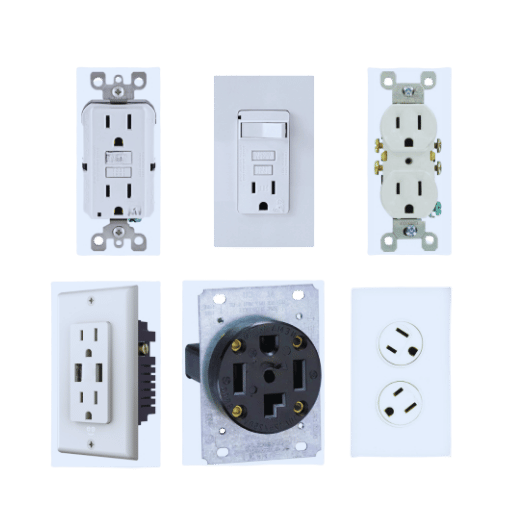
Electrical outlets or receptacles are devices that supply electric power to appliances and devices. Others differ in design and voltage to suit various applications. Common types are:
|
Type |
Voltage |
Purpose |
Key Feature |
|---|---|---|---|
|
Standard |
120V |
General use |
Common in homes |
|
GFCI |
120V |
Wet areas |
Shock prevention |
|
AFCI |
120V |
Fire prevention |
Arc fault detection |
|
240V |
240V |
High-power devices |
Double voltage |
Understanding the specific applications and safety features of these outlet types is important to ensure they are used properly and conform to their electrical standards.
What is an Electrical Outlet?
An electrical outlet, also known as a receptacle or socket, represents an electrical device fixed onto walls, floors, or ceilings, providing electrical power or access to electricity for the connection of an appliance or device. It acts as the interface between the electrical wiring of a building and the equipment requiring electricity. The myriad types of outlets are designed for different situations, voltages, and safety needs as per the above table. In addition to meeting stringent safety standards, electrical outlets are often subject to the regulations of the country’s electrical codes. Technological advancements have brought about outlets featuring USB charging ports, smart connectivity, and much-improved safety features like tamper resistance. One must understand the function of electrical outlets and use them correctly to be energy efficient and healthy in the operation of any electrical system.
Importance of Different Types of Electrical Outlets
Variant power outlet types were found to be important factors in safety, usefulness, and accessibility to different devices, conditions, and electrical powers.
|
Type |
Purpose |
Key Feature |
Location |
|---|---|---|---|
|
Standard |
General use |
Basic design |
Homes, offices |
|
GFCI |
Shock prevention |
Auto shut-off |
Wet areas |
|
AFCI |
Fire prevention |
Arc detection |
Bedrooms, living |
|
Tamper-Resist |
Child safety |
Built-in blocks |
Homes, schools |
|
Weather-Resist |
Outdoor safety |
Moisture-proof |
Patios, decks |
|
USB |
Device charging |
USB ports |
Bedrooms, offices |
|
Smart |
Remote control |
WiFi-enabled |
Smart homes |
|
20A |
High power |
T-slot design |
Garages, kitchens |
|
Specialty |
Appliance use |
Custom design |
Kitchens, laundry |
|
Rotating |
Space-saving |
360° rotation |
Tight spaces |
Common Uses of Electrical Outlets
An outlet can be used for plugging in a device such as a lamp, a phone, a TV, or a washing machine.
|
Key Point |
Description |
|---|---|
|
Devices |
Lamps, phones |
|
Appliances |
Refrigerators |
|
Purpose |
Connect to grid |
|
Voltage |
120 volts |
|
Types |
Standard, NEMA |
Standard Electrical Outlets

Types of Standard Outlets
Standard outlets are 15-amp duplex types, including GFCI, AFCI, USB, tamper-resistant, weather-resistant, smart, and specialty outlets, all designed for safety, convenience, or appliance needs.
|
Type |
Key Feature |
Best Use |
Safety |
|---|---|---|---|
|
15-Amp Duplex |
Basic 2 slots |
General appliances |
Standard |
|
GFCI |
Shock protection |
Wet areas |
High |
|
AFCI |
Fire prevention |
Bedrooms, living rooms |
High |
|
USB |
USB charging |
Electronics |
Moderate |
|
Tamper-Resistant |
Childproof |
Homes with children |
High |
|
Weather-Resistant |
Moisture-proof |
Outdoor areas |
High |
|
Smart |
Remote control |
Energy management |
Moderate |
|
Specialty |
Custom needs |
Heavy appliances |
Varies |
Duplex Outlets Explained
The duplex outlet remains the most familiar outlet in residential and commercial spaces. It includes two receptacles, wherein the two devices can be plugged simultaneously. These types of outlets receive a standard voltage output, in the U.S., normally 120 volts, to give power to almost all house appliances or home-style electronic gadgets. Biplex outlets come with built-in tamper-resistant shutters in some cases to stop unwanted contact with electrical parts, making for an extra measure of protection against children or casual use. They are good outlets to provide electrical energy in other residential and commercial areas.
Installation and Safety Tips for Standard Outlets
- Turn Off Power: Always switch off the power supply at the circuit breaker before starting down a delving into any installation or repair work to avoid electrical shock.
- Use a Voltage Tester: Before embarking upon your work, use a voltage tester to validate that the outlet underworks are completely de-energized.
- Ensure Proper Grounding: Make sure the outlet is correctly grounded to avoid electrical hazards and for the safe working of the devices.
- Follow Local Codes: Follow local electrical code requirements, thereby assuring code adherence and safe installation.
- Use Tamper-Resistant Outlets: Tamper-resistant outlets shall be installed for extra safety, particularly where there are children.
- Check Wiring Connections: Check that all wire connections are tight into the terminals, but do not overtighten as this can cause damage to the component.
- Inspect for Damage: Make sure that the outlet or wiring is not damaged physically before installation or usage.
- Label Circuit Breakers: Properly label the respective circuit breaker for future reference and maintenance ease.
- Use Proper Tools: Use insulated tools designed for electrical work to minimize electric shocks.
- Test the Outlet: After the installation process is finalized, employ the receptacle tester to ascertain whether it is properly wired and functional now before reconnection of the power.
Modern Electrical Outlets

USB Outlets for Charging Devices
USB outlets are a contemporary solution for charging electronic devices without requiring the usual power adapters. They combine standard and USB-friendly devices and allow users to plug their smartphones, tablets, or other USB-compatible devices for charging. They work well when it comes to environments that are filled with multiple devices, minimizing the clutter of adapters while satisfying the need for fast and dependable charging. Installation is quite simple, involving the replacement of a regular outlet with a USB-type outlet, making for a handy update in any room.
Smart Outlets and Home Automation
Smart outlets act as a home automation system, providing control of appliances to the user. They include remote controls through smartphone apps or voice assistants, where they can create schedules for turning appliances on or off and keeping track of energy consumption levels. They enhance convenience and energy efficiency while allowing for another level of smart home functionality. They mostly support popular automation platforms for seamless integration.
Switch Outlets: Control and Convenience
Smart switch outlets are great things to have in the house; all sorts of benefits can be brought by their modern touch of control, convenience, and efficiency. Modest data insights reveal that “best smart outlets for energy savings,” “smart outlets energy saving,” “smart outlets for energy saving,” “best smart outlets,” and even “how to integrate smart outlets with Alexa” are frequent keywords in search trends. This means that customers want their technology to simplify their lives, including energy management. Smart power switch outlets let them switch on/off the power to a device and monitor energy consumption in real time, hitting both marks. It adds to the versatility that they can join other systems such as Google Home or Amazon Alexa; in this way, users can enhance and develop their smart home setup.
Choosing the Right Outlet

Assessing Your Electrical Service Needs
While figuring out my electrical service requirements, I first analyze the devices and appliances I’m going to be plugging into the smart switch outlet. I consider the amount of power appliances draw, the load capacity, and whether the outlet is going to fit into my existing electrical setup. Then, I am concerned about whether my outlet supports my smart home setup, such as Google Home or Amazon Alexa, for easy integration. I can then pick an outlet that fulfills my needs for functionality and energy management very well.
Factors to Consider for Different Applications
- Power Requirements: The outlet should match the power needs of the appliances without surpassing maximum load capacity.
- Compatibility: Confirm the outlet’s compatibility with whatever smart home ecosystem is in place: Google Home, Amazon Alexa, Apple HomeKit, et al., for easy control and automation.
- Energy Consumption Features: Sometimes, energy-consciously inclined smart outlets offer an energy consumption tracking feature.
- Connectivity Type: Choose from Wi-Fi, Zigbee, Z-Wave, or Bluetooth, based on your home’s network setup.
- Ease of Installation: Buy a smart switch outlet that’s easy to install and configure, be it a plug-in or a hardwire option.
- Remote Control: Will the outlet be able to be remotely controlled or scheduled via a mobile app?
- Automation Integration: See whether the device can integrate within routines or be triggered off of other smart devices, like a motion sensor or scheduled activation.
- Safety Features: Consider the essential safety certifications, surge protection, and overload protection mechanisms since these are critical in consistent, reliable operations.
- Physical Design: Pay attention to the outlet’s physical shape to ensure it meets spatial requirements and does not block nearby outlets.
- Budget and Scalability: Consider the price of a smart outlet and its scalability to add more devices to the system down the road.
Consulting with a Professional Electrician
When choosing and installing smart outlets, a professional electrician must be consulted for safety and functionality. Based on the latest figures from Google’s search engine, one of the most asked questions is whether or not it is necessary to hire an electrician to install smart outlets. Some smart outlets are plug-and-play and do not require installation. However, some need to be hardwired into the electrical system of your house, and for that, you would certainly need a licensed electrician.
Electricians ensure that all work complies with the laws and local codes governing electricity and that compatible wiring and grounding systems are in place. They can also review the electrical capacity and limitations of your house while considering the areas and setups of smart outlets to ascertain the paying connectivity and efficiency. Consultation will always save you hours and lots of money on disastrous mistakes, especially in older houses that might not allow some modern technology without a few upgrades.
Electrical Safety and Hazards

Common Electrical Hazards
Common electrical work hazards include wet conditions, damaged equipment, improper grounding, risks of electrical shock, arc flash, burns, electricity, fires, and explosions.
|
Key Point |
Details |
|---|---|
|
Electrocution |
Fatal electric shock |
|
Burns |
Caused by arc flash |
|
Arc Flash |
High-temperature discharge |
|
Shock |
Direct electric contact |
|
Fires |
Overloaded circuits |
|
Explosions |
Faulty equipment |
|
Damaged Equip. |
Frayed wires, loose parts |
|
Improper Ground |
Missing safety grounding |
|
Wet Conditions |
Increased electrocution risk |
Preventative Measures for Outlet Safety
- Install Ground Fault Circuit Interrupters (GFCIs): These protect against shock by cutting the power supply in case of any ground fault. They are crucial in areas exposed to water, i.e., kitchens and bathrooms.
- Don’t Overload Outlets: Electrical devices should be spread out among outlets to prevent them from overheating or becoming a fire hazard.
- Test Outlets for Damage Regularly: Look for cracks, burns, and loose contacts; replace outlets immediately when damaged.
- Good Grounding Practices: Properly ground all outlets to reduce potential shock hazards or damage to equipment.
- Keep Dry: Keep outlets and cords out of damp places, and dry wet outlets thoroughly before use.
- Contract a Licensed Electrician: Employ contractors or multistage technical support to carry out installation or repair work.
Thus, following these will greatly reduce the risks posed by electrical outlets.
Understanding Ground Fault Circuit Interrupters
When it detects wiring issues and grounds coughing up more than five milliamperes of the total electrical power, the Ground Fault Circuit Interrupter unit would quickly snap, interrupting electrical power, stopping any possibility of electric shock or electrocution.
Frequently Asked Questions (FAQs)

Q: What are GFCI outlets, and where are they used?
A: In a nutshell, GFCI outlets protect against electrical shocks by keeping an eye on the electric current that flows through them. Power is interrupted whenever an imbalance is found. Outlets are therefore required to be installed in places near water: the kitchen, the bathroom, outdoors, and so on.
Q: Another Type of Outlet, AFCI, That Protects Against Electrical Fire
A: AFCI ones detect and shut down arcing faults that cause fires. The outlets are monitored in electrical current unusual patterns caused by arcing; thus, they shut down circuits so that arcing-induced electrical fires might be avoided. The requirement for them in bedrooms and some living areas is gradually increasing since it could improve the safety of the electrical system in your house.
Q: What are tamper-resistant outlets?
A: These outlets are designed to allow something like a plug with two prongs to be easily inserted, but they prevent insertion of foreign objects that could lead to electric shock, especially in homes with small children. They meet national electrical code standards and have become arguably the most common outlet in new homes.
Q: What are the different types of electrical outlets?
A: There exist several types of outlets, such as standard, GFCI, AFCI, and specialty outlets. These different types of outlets are designed to offer different safety precautions, such as protection against the risk of electrocution or preventing electrical fires; they also provide additional services, such as incorporating an outlet into USB charging ports.
Q: How can I change out my outlets to be safer?
A: Changing out outlets can increase the safety and functionality of your home. Replace standard outlets with GFCI or AFCI outlets where applicable, especially in areas prone to moisture or where electrical fires could occur. Finally, install tamper-resistant outlets where small children are present.
Q: What special duties do special outlets fulfill?
A: Specialty outlets cater to specific electrical needs beyond the general or standard needs of a home. Some examples include the outlets for dryers and ranges; others include USB outlets, which offer a convenient way to charge electronic devices. A diverse electrical need is typical in modern homes.
Q: Why must outlets in your house meet the electrical code?
A: Outlets in your house must meet the electrical code for safety and functional reasons. Electrical code requires exposure safety against electric shocks and electrical fires, so that all outlets aforesaid in the code are engineered to preclude electrical hazards and ensure that your house’s electrical system operates safely.
Q: How do I understand the different types of outlets and their uses?
A: Understanding the different types of outlets and their uses involves understanding what distinguishes them and what safety features they offer. The more one knows about GFCI, AFCI, tamper-resistant outlets, and specialty outlets, the better-equipped the homeowner becomes to decide which outlets are better for use in certain areas around one’s home and within one’s electrical needs.
Reference Sources
1. The study of the symmetric components’ distribution in an electrical system with a diesel generator at a non-symmetric load
- Authors: O. Bialobrzheskyi et al.
- Publication Date: 2024-10-30
- Summary: The paper investigates the symmetrical components of current and voltage for microgrid elements with an autonomous synchronous generator under non-symmetrical load conditions. Visual programming methods were employed in Simulink/Matlab to investigate various types of loads concerning electrical systems. The results of the research reveal that the nature of the asymmetrical load greatly upon how the electrical system behaves, underscoring the importance of studying the characteristics of the load in electrical design (Bialobrzheskyi et al., 2024).
2. Survey of electrical modeling-related concepts for various battery types
- Authors: N. El Ghossein et al.
- Date of Publication: 2015-06-01
- Summary: The work reviews a number of circuit models, as instantiated in the literature, for several types of batteries, such as Nickel-Metal Hybrid, Lithium-Ion, Lead-acid, and Lithium Polymer. The study underscores how modeling methods are seldom trivial for use in practical applications of electrical systems, especially in energy storage (Ghossein et al., 2015, pp. 39–44).
3. Why are there different plugs for electricity in different countries? – University of Florida