When considering the stability and strength of any structure, the design and construction of column footing assumes a significant role. One quite versatile element serves in the transfer of loads from columns to footings while preventing structural failure-the pedestal. But the question arises: What is a pedestal, and why is it so essential in any construction project? This blog article outlines the basics of pedestals in construction, with a special focus on column footing design and how they contribute to making structures safe and durable. Whether your focus lies in the construction trade or you’re simply curious about the engineering that goes into building stable structures, this guide is sure to enhance your understanding. Continue reading to learn about the significance of pedestals and their impact on contemporary construction practices.
Understanding the Importance of Pedestals
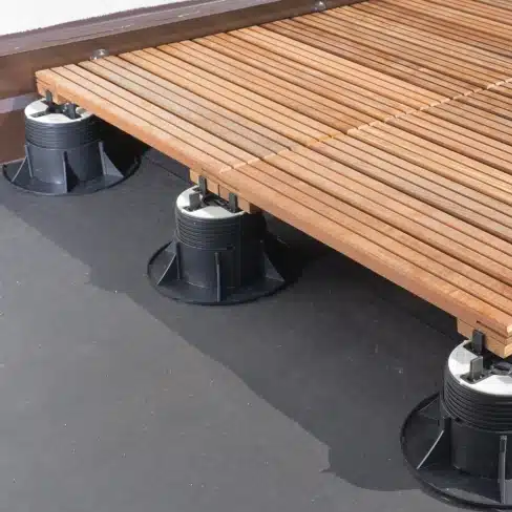
The pedestal serves as a base that supports the column and distributes loads from the superstructure to the foundation evenly. They prevent settling, cracking, or other forms of structural instability as they absorb and transfer stresses. Characteristically, pedestals ensure not only structural stability but also durability by protecting columns from moisture conditions and sometimes adverse soil reactions. The design of pedestals must be made with due consideration for the safety and durability of any structure in different environmental conditions.
Function of Pedestals
They are fundamental components of structural engineering, ensuring that columns and vertical structures are adequately supported. Modern data and recent design practices describe pedestals as an intermediate element that distributes the concentrated column load to a wider surface area, thereby decreasing stress on the foundation and preventing localized failure. Thus, it provides a means of slightly misaligning something during construction and is also raised to avoid water ingress at ground level, ensuring the long life of the structure. The variety of pedestals, driven by different environmental and dynamic requirements, showcases newer materials and construction techniques, providing a significantly greater amount of versatility and, consequently, a greater need by today’s structural and architectural firms.
Benefits of Using Pedestals
- Improved Structural Stability
The pedestals distribute the loads evenly against concentrated weights, thereby enhancing structural stability against adverse environmental conditions and promoting long-term durability.
- Improved Drainage System
Pedestals elevate the platform, allowing for water drainage and airflow beneath the surface to facilitate the evaporation of any moisture that may accumulate, thus preventing microbial growth and material deterioration.
- Accommodates Uneven Surfaces
The pedestals can be adjusted to account for uneven ground levels or slight misalignments that may occur during construction work on site. This adaptability provides a perfect finish that stands with pride on both commercial and residential grounds.
- Minimize Maintenance
Elevated platforms make maintenance and repairs relatively straightforward. Hence, accessing electrical wiring, plumbing, or any other installation underneath becomes less laborious, besides reducing the time spent on technical adjustments.
- Environmental Versatility
With material improvements, pedestals are designed to resist environmental stresses, including extreme temperatures, ultraviolet radiation, and chemical exposure, allowing them to fit seamlessly into projects operating in challenging climates or industrially demanding atmospheres.
Applications of Pedestals in Construction
- Raised Flooring Systems
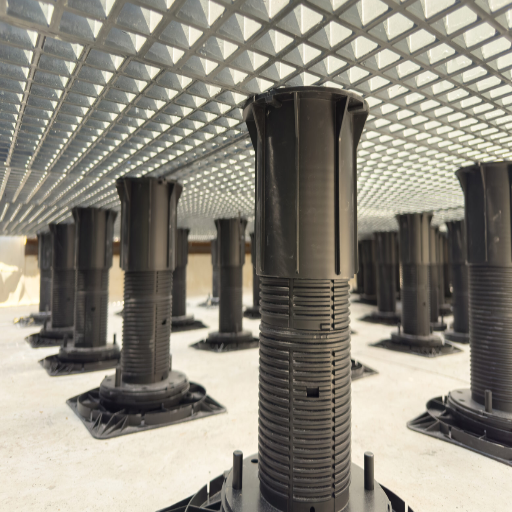
The pedestals are commonly used in raised flooring systems for commercial buildings, data centers, and offices. Therefore, they facilitate easy routing of cables, ventilation, and other utilities beneath the floor while also offering a level walking surface.
- Rooftop Terraces and Decking
The pedestals make excellent supports for pavers, tiles, or wooden planks when creating rooftop terraces or decking. They allow for drainage, preventing pooling; therefore, they ensure longevity when used in outdoor areas.
- Landscape Gardening
A pedestal system is used in landscaping projects to level surfaces for pathways, plazas, or recreational spaces. They offer solutions for uneven terrain and stability in various garden layouts.
- Industrial Platforming
The pedestal system in industrial working environments utilizes heavy loads, chemical spills, and temperature changes while still ensuring integrity and function.
- Sports Facilities
Pedestal supports are used in the construction of sports facilities, primarily for seating and modular floor systems. They offer flexibility in layout design and are also an easy system to maintain and modify as needed.
Design of Pedestals
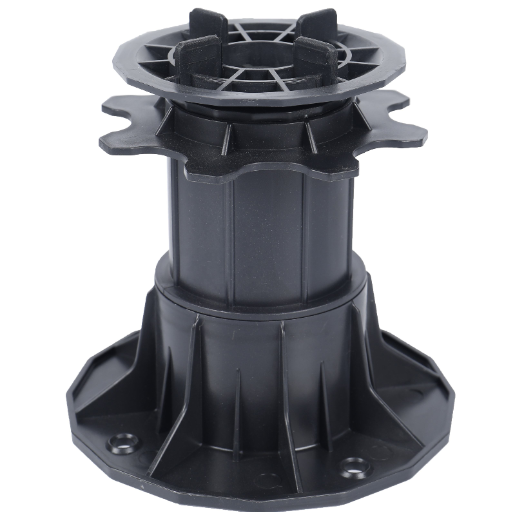
A pedestal design will assure stability, strength, and flexibility. Usually, they are constructed with concrete, steel, or sturdy polymers, allowing them to withstand various types of loads and weather conditions. The pedestals distribute the weight to balance it and reduce the risk of structural failure. Adjustment allowing precise levels may often be available in case it needs to be placed on uneven floors. Finally, some modern designs will also focus on the quick installation of the pedestal into various other structural systems, allowing it to be used for numerous applications.
Types of Concrete Pedestal Designs
Types of concrete pedestal designs are square, round, octagonal, reinforced, and decorative.
| Type | Shape | Purpose | Material | Feature |
|---|---|---|---|---|
| Square | Square | Load-bearing | Concrete | Stable |
| Circular | Round | Aesthetic | Concrete | Even Load |
| Octagonal | Octagonal | Architectural | Concrete | Unique Design |
| Reinforced | Any | Heavy-duty | Reinforced | Durable |
| Decorative | Any | Visual Appeal | Concrete | Customizable |
Reinforcement in Pedestal Construction
Thus, reinforcement is essential for ensuring the durability and load-bearing capacity of a concrete pedestal. The presence of steel rebar or wire mesh within the structure increases the tensile strength of the pedestal against cracking and deformation under heavy load. The exact location of reinforcement varies depending on factors such as anticipated load and environmental conditions, as well as the overall size of the pedestal. Nowadays, thanks to developments in engineering and materials science, fiber-reinforced concrete and special types of reinforcement can be employed, which enhance performance while mitigating corrosion. Properly reinforced pedestals increase the bearing capacity and service life of structures, providing safety and stability in various applications.
Compression and Bearing Stress Considerations
There arises a difference, though, when we discuss compression and bearing stress in erected pedestals-the type of stresses and loads that act on the material, opposing its strength. Compression stress occurs when a load presses against the pedestal, forcing it to bear the downward force over its cross-sectional area. Engineers determine the safe bearing capacity of the pedestal to ensure its stability and longevity, taking into account the material’s strength, the nature of the foundation support, and various factors of safety.
In recent times, advances in material development and computational modeling have led to superior methods for analyzing stresses and their distribution. With the use of high-performance materials and efficient design techniques, pedestals can be designed to withstand greater loads without succumbing to crushing. Maintenance and regular inspections prevent overloading and abrupt failures, furthermore securing the service life of various applications.
Construction Process of Pedestals
Constructing pedestals involves many key steps to ensure long-lasting durability and intended function:
- Site Preparation: The area is cleared and leveled to provide a stable foundation. Soil tests are conducted to determine the load-bearing capacity.
- Formwork Installation: Temporary molds are erected to give the pedestal its shape and dimensions.
- Reinforcement Placement: The steel reinforcements are placed within the formwork to ensure structural integrity.
- Concrete Pouring: High-quality concrete is poured into the formwork, evenly distributed to prevent any voids.
- Curing Process: The concrete is allowed to cure under controlled conditions to achieve its ultimate strength.
- Final Inspection: The completed pedestal is checked for any defects or irregularities and verified against the design specifications.
To ensure the security of the structure and its reliability in withstanding planned loads, these steps are required.
Materials Used in Pedestal Construction
- Concrete, being the primary material for pedestal building, endows structures with qualities such as strength, durability, and versatility. Concrete is primarily composed of a mixture of cement, sand, gravel, and water. Additives such as fly ash or silica fume may be added to enhance performance.
- Reinforcement Steel (Rebar): This consists of steel bars or mesh placed inside the concrete to impart tensile strength and thus refrain it from cracking under load.
Formwork: Temporary or permanent molds used to shape or hold the concrete in place while it is being poured and cured, made out of wood, metal, or plastic. - Waterproofing Membrane: Acts as a protective layer to prevent moisture ingress, ensuring the structure remains intact for a longer duration.
- Curing Compounds: A chemical mixture sprayed or applied on the surface that helps retain moisture through the curing stage and helps the concrete develop its best strength.
- Grout: Used for grouting in between various voids or fixing anchor bolts or between prefabricated components.
The choice of these materials is subjected to the design and environmental conditions to ensure the pedestal structure retains lasting beauty, stability, and capability to perform the assigned function satisfactorily.
Quality Control in Pedestal Construction Projects
Quality inspection during pedestal construction ensures the structural soundness, durability, and safety of the project. Quality control practices are implemented through various stages, including material testing, design reviews, and site inspections. Generally, materials such as concrete, grout, and rebars should meet the project-standard requirements outlined in industry codes. Sometimes advanced material tests such as non-destructive testing (NDT) are incorporated, along with compressive strength tests when the material needs to perform under load conditions.
Modern era technologies also play a key role in quality assurance. Very few are aware that BIM and real-time monitoring can ensure construction processes are free of potential problems, such as alignment discrepancies or tensile stresses. By combining traditional methods with innovations, the project manager advances toward maintaining high-quality standards while mitigating possible risks associated with the successful completion of the pedestal structure. Continuous record-keeping and auditing ensure everyone complies with regulatory work.
Pedestals about Column Footings
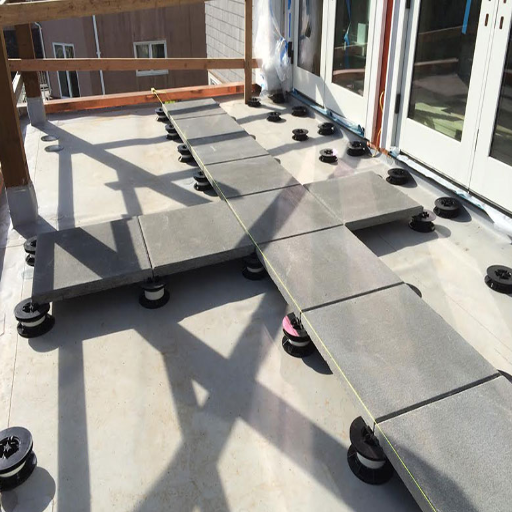
Pedestals in column footings efficiently transfer the load from the column to the foundation, thereby ensuring stability. The column is raised to prevent possible exposure to moisture or other harmful agents at the ground level. Also, pedestals contribute to spreading the load over the footing evenly and avoiding any excessive stresses that may be detrimental to the footing, thereby strengthening the foundation system structurally.
Column Types: Metal Columns vs Concrete Columns
Metal columns are lightweight, sturdy, and easy to install. Concrete columns are permanently durable, fire-resistant, and easily the most suitable for general-purpose construction work.
| Type | Strength | Weight | Durability | Fireproof | Cost |
|---|---|---|---|---|---|
| Metal | High | Light | Moderate | Needs Coating | Higher |
| Concrete | Moderate | Heavy | High | Yes | Lower |
Footing Design and Load Distribution
The footing design and load distribution processes are among the most essential principles of structural engineering, as they enable the safe transfer of all loads from the structure above to the earth below. Proper design of footings involves considering soil bearing capacity, building loads, and environmental conditions to prevent uneven settlement or structural failure. Major types of footings include isolated footings, combined footings, and raft foundations, with each chosen depending on the load considerations and soil requirements. By creating an ideal balance of forces and considering developments in construction materials and techniques, modern footings are designed to provide the utmost safety and efficiency for any given structural project.
Contact Area and Load Columns
Below the footing, the contact area is meticulously designed and formed to transfer the loads imparted on the footing by the columns evenly into the soil beneath. This distribution of loads prevents the application of force above the soil strata that may cause differential settling or collapse in the structure above. Columns, which constitute the central supporting part of the structure, carry vertical loads from the superstructure to the footing below and maintain the stability and balance of the entire structure. Present-day civil engineering calculations, combined with improved building materials, enable the design of footings and load-bearing columns that can adequately withstand heavy loads while maintaining their structural integrity. With the developments in data modeling and construction technology, such designs are set to grow even further.
Reference Sources
1. “Development of Autonomous Robots for Construction” (Hachijo et al., 2024)
Key Findings:
- Developed autonomous mobile robots for ceiling boards and raised floor construction work, including robots that can install pedestals and panels to floor slabs.
- The robots are composed of industrial robotic arms and can autonomously perform tasks such as attaching plasterboards and installing pedestals.
Methodology:
- Developed two types of autonomous robots for construction work – one for ceiling board installation and one for raised floor construction.
- The robots utilize sensors, such as laser range finders and cameras, to detect and interact with the construction environment.
- Tested the robots’ performance in case studies of ceiling boards and raised floor construction.
Key Findings:
- Analyzed three clocks and their corresponding pedestals, all of the same “pendules aux biches” model, to study their construction, marquetry, and mounts.
- Found significant differences in the construction, marquetry design, and mount processing between the three ensembles, suggesting they were manufactured in two different workshops.
Methodology:
- Extensively analyzed the three clock and pedestal ensembles in terms of construction, marquetry, and mounts.
- Compare the features of the three ensembles to distinguish two different production types.
3. Top Power Pedestal Manufacturer And Supplier In China
Frequently Asked Questions (FAQs)
What are the uses of pedestals in construction?
Pedestals are used to support various structures, including columns and statues, providing essential support in construction projects. They help create an elevated platform, ensuring stability and durability in modern construction.
How are pedestals designed in construction?
The design of pedestals takes into account several factors, including the load they must bear, the height of the column they support, and the specific conditions of the construction site. Pedestals are designed to withstand significant loads while maintaining stability.
What is the function of pedestals in modern construction?
Pedestals play a vital role in modern construction by providing a stable base for various structures. They are essential for maintaining the integrity of columns and ensuring proper load distribution, which is critical for the long-term success of construction projects.
What types of pedestals are commonly used in construction?
There are various types of pedestals used in construction, including adjustable pedestals, concrete pedestals, and steel pedestals. Each type is selected based on the specific project requirements, including load-bearing capacity and design aesthetics.
How do pedestals support metal columns?
Pedestals are designed to support metal columns by distributing the weight evenly across a larger contact area. This design helps to prevent punching failure of the footing and ensures that the structural integrity is maintained under load.
What are the benefits of using pedestals in construction?
The benefits of using pedestals include improved stability, enhanced aesthetic value, and the ability to support heavy loads. They also provide a cost-effective solution for creating elevated platforms and reducing the risk of structural failure.
What is the construction process for pedestals?
The construction of pedestals involves selecting appropriate materials, such as hollow concrete blocks or reinforced concrete, and ensuring they are filled with concrete. The design must accommodate the required reinforcement to effectively handle the expected loads.
How do pedestals help in the design of columns?
Pedestals help in the design of columns by providing a strong foundation that minimizes the risk of failure. They ensure that the bearing stress is within acceptable limits and that the structure can withstand various loads and environmental conditions.
Can pedestals be used for statues?
Yes, pedestals are often used to support statues, providing both aesthetic value and stability. They elevate the statue, making it more visible while ensuring it remains securely anchored to prevent tipping or damage.
What is the range of pedestals available for construction projects?
The range of pedestals available for construction projects includes options for different heights, materials, and designs. This variety allows construction professionals to choose the most suitable pedestal for their specific project needs and conditions.