
Marina ground fault protection, which stands widely for electrical safety, helps in preventing injuries and property damage related to shock. one of the most debated issues faced by specialists is the lower threshold set at 30mA compared to the increased-value higher threshold at 100mA. Which of the standards holds the best equilibrium between practicality and safety? The article will be delving into the tiny, intricate details between the both of them, thereby pointing to their main distinction, with their good sides and drawbacks. No matter the operator of the marina, an electrical professional, or a home user expecting waterfront safety, this guide will certainly show you the meaning of these standards with a view to making the best decision assuring the protection of lives and property.
Understanding Ground-Fault Protection (GFP)
What is Ground-Fault Protection?
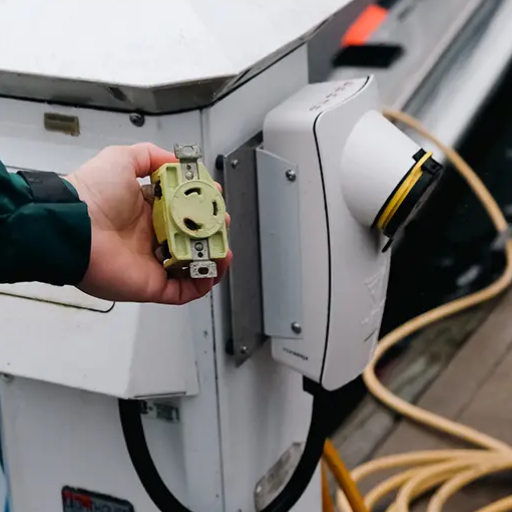
Ground-fault protection (GFP) is a safety mechanism designed for detecting and providing a response to faults that occur when current deviates from the intended path and makes its way to the ground. This happens in the presence of some nonideal elements like broken insulation, deteriorated wiring, or compromised electrical equipment. Faults are a danger mostly because they can easily initiate electric shock and fire hazards, especially in installations such as marinas, or in houses closer to water sources.
The primary objective of GFP is to protect human life and property by shutting down the circuit as soon as a malfunction is detected. This is usually managed through circuit breaker actions or ground-fault circuit interrupters (GFCIs) that are designed to recognize any offenses and terminate power forthwith without hesitation. By responding in milliseconds, these systems try to eradicate any harmful effects from ground faults.
GFP is very important in places where water is present, since water conducts electricity and creates the risk of electric shock. GFP is thus used in electrical settings outdoors and indoors for safety in homes, commercial reasons, and industries. It is well known that well-implemented ground-fault protection adheres to safety standards to prevent disasters and place trust in reliable operation of the electrical systems.
Importance of GFCI in Marinas
GFCIs Participate significantly in enhancing the safety of marinas. Given the increased risks of electrical shock in marinas due to the combined circumstances of water and electrical currents, GFCIs are responsible for detecting ground faults and strictly curtailing the power; hence ensure the safety of people as well as boats and other marine equipment.
There is a persistent and perplexing concern of electric shock drowning (ESD) in the marinas. Stray electrical currents can get into the surrounding water, causing an invisible danger to swimmers and boaters. GFCIs serve as an important countermeasure to avert most of these risks by turning off power before dangerous electrical currents affect anyone. This proactive protection can save lives and greatly reduce accidents brought about by faulty electrical systems.
In addition to this, GFCIs are also important in the maintenance of electrical appliances maintained in the marinas. They quickly respond to any fault current, protecting the electrical systems and docking equipment, thereby reducing expenses, maintenance, and further damage. The use of GFCIs is not just needed for the regulation of the marinas in many regions, but acting as an important instrument in guaranteeing safety and building trust among guests and staff.
Overview of Electrical Safety Standards (NEC & ABYC)
As a means to allow proper operations of and to guarantee safety within marina environments, electrical safety standards become extremely critical. In the United States two highly influential as well as significant organizations have taken these responsibilities unto themselves namely, The National Electrical Code (NEC) and The American Boat and Yacht Council (ABYC). The aforementioned both institute policies and procedures designed to mitigate human success, particularly given waterfront environments that heighten the level of risk for such accidents manifolds.
NEC consists in land-based electric power installations and puts forth regulations concerning wiring, grounding, and overall electric power. NFPA-70E discusses electrical hazards inherent in marina environments which can result in shock, fire, or electrical system failure. Compliance with NEC standards is a necessity to bring about operational safety of and reduce liability for failure on the beach or sometimes legally required.
ABYC especially deals with the electrical systems of the vessel to confirm that the electrical system, by design and maintenance, meets a very stringent safety criteria for the boats. While NEC is largely centered on marina infrastructure, ABYC is critical in ensuring individual watercraft stay safe; thus, the NEC and ABYC together break a comprehensive doctrinaire regarding marina electrical safety. Compostation of these standards within the facility creates greater safety and so brings peace of mind among the marina-users.
The Marine Environment and Electrical Safety

Hazards to be Aware of in a Marina Setting
There is a unique level of risk in marina locations mainly because they combine water, an electrical system, and–in that case–humans. If electrical equipment is not properly installed or maintained, a dangerous situation of electric shock drowning (ESD) and fires would arise. ESD is formed when some of a ground-fault current leaks into the water environment to create an electric field. This can incapacitate the bather by preventing him from saving the first or drowning him. Since water is an ideal conductor of electricity, cases of shock and burns are comparatively more in the water medium than in air, especially in marina settings.
In most cases, the risk of saltwater and moisture exposure is quite common or marina settings which lead to corrosion of electrical components. Corrosion of an electrical system could make it completely inoperable yet more suitable to short circuits and arcing which can well land into fire or other electrical hazards. Frequent testing of the system and using materials which have been designed to marine specifications seem to be the only cure at hand.
Furthermore, marinas host many boats and accompanying human presence, which indeed adds to the likelihood of increased chances of accidents. Danger zones of various types also extend when circuits are overloaded, common ground is not established in some vessels, and certain shore power connections are seriously torn, leading to potentially hazardous conditions for both boat operators and marina staff. These risks may be considerably eased by compliance with safety guidelines such as those of the National Electric Code (NEC) after appropriate handling of maintenance items; therefore, the first priority is to secure the marina for all users.
The Role of Shore Power in Electrical Safety
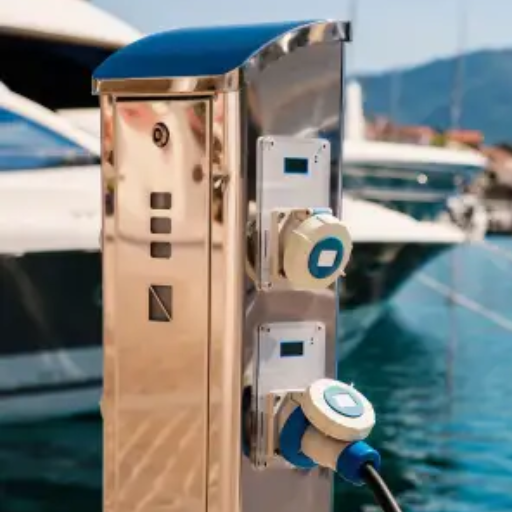
Shore power is a very important part in ensuring electrical safety amongst vessels and marinas dependent on them for power supply. It provides a stable and reliable electricity source permitting boat operators to use essential electrical systems and appliances without reliance on onboard generation. Properly installed and maintained shore power systems will never allow risks such as electrical fires, equipment damage or electric shock to arise.
For the sake of safety, the use of shore power systems must conform to the relevant safety standards, which have to be, among others, the ones laid out by the NEC (National Electric Code). These standards cover things like grounding, overcurrent protection, and proper connections labeling, and so on. It is paramount to follow these standards so that the equipment doesn’t malfunction and consequently the risk of accidents is not increased through electrical faults or improper installation.
One cannot ignore the fact that shore power, just like every other system, needs constant maintenance support. The power pole, breakers, and connectors must regularly be checked for any signs of wear and/or damage; fixing these issues is very important in order to maintain safety and functionality of the system, thus preventing the marina’s people and vessels from being exposed to hazardous situations.
Electric Shock Drowning (ESD) Risks
Electric Shock Drowning (ESD) occurs when an individual comes into contact with electricity in water. This happens most often from poor wiring or dirty or broken items and it manifests in the water as an electric current which passes energy. There are life-threatening emergencies because the water in the pool can be electrified, as even the smallest electrical neurological impulse will help to overcome muscular motor control and thus make it impossible to swim or escape.
The main cause of ESD is faulty or improper grounding of electrical systems positioned near or on water, such as docks, marinas, or boats. Inadequate-soap wiring or an equipment failure can let in summation stray DC or AC currents leak into the surrounding waters. This is especially hazardous when freshwater increases the risk of being caught from electricity exposure due to lower conductivity.
To prevent ESD, inspection and maintenance of electrical systems must be done on a regular basis. Ensure that all wiring and appliances lying adjacent to water meet safety standards and are adequately grounded. The installation of GFCIs is also important as they can shut off electrical power when electrical faults are encountered. People must also stay clear of swimming in areas close to docks or boats connected to a power source and need to know the possible dangers of ESD in order to promote safety in water areas.
Comparing 30mA and 100mA Ground-Fault Protection
Technical Differences between 30mA and 100mA
The primary difference in sensitivity to electrical leakage current defines ground-fault protection of either 30mA or 100mA. The 30mA ground-fault device is made to pick up and disconnect smaller amounts of leakage current, thereby providing a higher level of personal safety. This sensitivity is very useful whenever human beings are close to electrical faults or a hazard to residential localities, wet locations, or zones near water. Disconnecting the power supply at lower leakage levels significantly reduces the risk of electric shock.
In contrast, with 100mA ground-fault detectors, the system is less sensitive i.e. it is tripped only when higher leakage current flows. These would be similarly used in a fire prevention situation as opposed to protecting people, as currents of this level can generate enough heat to set something on fire. For industrial or commercial applications, the 100mA type seems a good choice with equipment safety and fire prevention at the forefront. Still, this may not be the best device to provide extended protection from shock if a higher potential for human contact exists.
The choice of 30mA versus 100mA depends on specific applications and safety requirements-a 30mA device might be the best choice for personal safety near water or residential circuits where the design ensures the limited time for an unwanted shock. For broader electrical system protection from potential fire hazards, especially in infrastructure or industrial installations, 100mA devices will be more important. It is very important to make an accurate assessment of the environment and level of risk when choosing the relationship between G. F. I. protection.
Benefits and Drawbacks of Each Threshold
30mA Threshold
The 30mA threshold is particularly best when it comes to safety for a human against electric shocks. Its sensitivity is best suitable for domestic and small-scale applications wherein man interacts more frequently with electrical systems. One of its advantages lies in its quick disconnection of supply in case of faults, which minimizes the severity of injuries and loss of human life. On the other hand, a single disadvantage is the frequent tripping of the device in cases of actual or simulated residual currents, which, even though always minor, may cause the occasional nuisance.
100mA Threshold
The 100-mA level of sensitivity is considered appropriate for the broader system protection, especially within industrial settings or infrastructure operated systems. This sensitivity offers a good tradeoff between safety and reliability, concentrating on eradicating electrical fires rather than bothering about minuscule faults. This characterizes its hugely seductive potential for areas that require heavier electrical loads. Yet, compared to a 30-mA threshold, it fails to protect the stronger shocks of great potential, so this is not useful for situations where human safety is very important.
Choosing the Right Threshold
The environment, the risks involved, and the particular circumstance will guide the choice of either 30mA or 100mA leakage current. The prevailing rule of thumb is in all residential applications and personal safety conditions, the lower 30mA sensitivity is desirable, especially for human health and life preservations. In contrast, at industrial applications or large-scale systems where fire prevention and protection of equipment are heavily enforced, the 100mA limit makes more practical sense. Therefore, due to risk of life and safety endangered, selection decision must be made in conjunction with consultancy and risk assessment, to comply with safety-provision requirements and aesthetics.
Impact of Electric Shock Prevention
Making a selection between 30mA and 100mA of ground-fault protection in marinas concerns a choice between providing personal safety against the real practicalities of operations. Set at a 30mA trip, ground-fault protection means more sensitivity-a higher-grade safety provider for individuals with lightnin-fast time so people are not perpetrated with electrical shock. The 30mA setting is most effectively adopted in installations where human-interaction must be max-safe reducing rapid ways of survival, which would otherwise be overwise fatal.
Another common ground fault trip threshold is 100mA used for equipment protection and continuity of operation in the larger electrical systems, giving priority to the higher maximum sensitivity. It keeps some prevention against shock, but on the main part is preventing fire, destruction of electrical infrastructure. You may consider this higher trip level of IΔN for meeting the industrial level requirement or more elevated load-requiring for marinas, for example.
The level that suitable ground-faultively maintained by protections indeed should put together some explicit consideration of potential hazards such as exposure of humans, environmental risk, and required electrical equipment. Standards of safety, as stipulated in these national codes, often recommend low ground-fault level settings for protection where water and humans come into play. In the end, the balance of factors ensures that these codes will be enforced, while marinas would still deal with particular operational needs.
Selecting the Right Ground-Fault Protection for Your Marina
Factors to Consider: Vessel Size and Equipment
Ground-fault protection selection of a marina largely depends on the size of the vessels to be accommodated. For electrical power of a large vessel, the risk of ground-faults would be higher owing to increased demand for such power. This is because bigger vessels have more sophisticated and thus more prone to failure electrical systems if not properly handled. Ground-fault protection systems must be capable of supporting these large vessels’ power needs without compromising safety and efficiency.
The kind of equipment, as well as the quantity of the equipment, present on board, is another major aspect coming into play. A modern boat with all the necessary gadgets and electrical systems could produce currents that, if not accounted for, may lead to ground-faults. Thus, the marina for whose clients are vessels with such special equipment or unique energy requirements should ensure that its protection systems are very much capable of handling these additional electrical loads with safety and functionality as their guiding principles.
The marina’s facilities, finally, should be compatible with the requirements of the particular boats. The electricity outlets, transformers, and distribution networks should be of a size and capacity that correspond to the expected boats and their electricity requirements. The compatibility of marina machinery and vessel systems is important not only for risk prevention but also for efficient operation. Careful consideration of these factors allows it to be certain that the chosen ground-fault protection system performs its dual role in safety and operational requirements very well.
Local Regulations and Compliance
Marinas have to comply with the local requirements as well as the safety measures for the electrical installation and operation. These regulations are in general defined by the local government authorities, and they can vary in different locations but their main purpose is to protect both the marina infrastructure and the users. To be in compliance, the marina often has to install ground-fault protection, have regular inspections done, and follow the same electrical codes that apply to all other waterfront facilities.
If the local authorities’ regulations are disregarded, the marina can suffer heavy fines, get closed down, and revocation of the safety measures for the users. Therefore, it is very vital for marina authorities to be aware of the particular requirements for their region and consistently perform maintenance practices to sustain their amenities. The procedure may involve obtaining certificates or permits which act as evidence of the marina being compliant with the standards imposed by the government.
Engaging the services of licensed electricians and keeping the communication lines open with the authorities about the latest regulations are the main requirements for compliance. In return, marinas will be able to cut risks, lighten like liability, and make their place a safe one for the vessels owners and the general public. Keeping a trail of compliance documentation is good practice, especially during the times of audits or inspections since it guarantees consistent compliance with all legal requirements.
Best Practices for Marina Electrical Safety
Marina electrical safety is a top priority that helps to prevent not only fires but loss of life as well. The first step towards that direction is to carry out regular checks on the electrical systems in the marina to spot and even rectify risks like oxidation of the wires or disconnections. Inspections conducted must conform to the local and national codes and be very strict in batches so as to have established safety standards. Employing certified electricians for installations and maintenance also assists in safe practice and risk minimization.
As another point of security, Ground Fault Circuit Interrupters (GFCIs) should be installed all over the marina. The role that GFCIs play in regulating electric shock is by fastly cutting the power in case of a ground fault. The assurance that all power columns, docks, and outlets have this equipment will positively impact safety around the water by a great magnitude.
Frequent education and training of the marina team and boat owners will also help to pass on the safety concept. Staff should be able to see the signs of electrical faults, such as circuit breakers that keep tripping or peculiar noises, and they should know what to do in case of a fire. It will be very helpful if the boat owners are informed about the dangers of poorly done onboard electrical systems and at the same time the use of recommended shore power cords will be an added precaution. Giving above safety practices priority ensures a cordial atmosphere for all.
Summary of Key Points
Importance of Compliance with Safety Standards
The compliance with safety standards is a prerequisite for life and property. In this manner, the standards reduce the chances of accidents related to electrical faults and other possible dangers aboard boats. The correct application of risky strategies forms a safer space that is both friendly to the ship’s staff and to the environment around them.
The application of good practices by boat owners can very much lower the incidence of accidents that are due to the installation being done wrong or the use of poor quality equipment. One instance is that using the correct shore power cords and having the electrical systems properly maintained will prevent power surging or overheating that might possibly be the root causes of severe happenings. Safety measures have already been put in place to eliminate such weaknesses beforehand; hence the people who are in the area are protected.
Moreover, the adherence to the ordained safety rules also aids in building responsibility and professionalism in the boating sector. When the entire community is devoted to the same practices it means that there will be trust among boaters and thus no conflicts will be created in common areas like harbors or docks. Compliance here is not only a legal requirement but also a very important part of the establishment of a tolerant and safe boating culture.
Final Thoughts on Ground-Fault Protection in Marinas
Ground-fault protection is very vital safety measure to be taken in marinas that guarantees the safety of boaters, marina staff, and visitors. The combination of water and electricity always poses a danger; thus, proper ground-fault protection considerably reduces the possible risks of electric shocks or even death by electrocution. The risks are even higher in marina environments since water presence increases conductivity. The installation and maintenance of ground-fault circuit interrupters (GFCIs) at marina docks is a major step towards the reduction of hazards.
Safety of life is the main reason but ground-fault protection also prevents electrical damage to equipment and boats. Electrical faults can disrupt numerous processes, leading to expensive repairs and property loss. By taking up right safety and regular checking, marina operators can make sure that their electrical systems are working properly giving everyone a smooth and safe experience.
Eventually, prioritizing ground-fault protection promotes a culture of accountability and trust among the marina community. If safety measures are properly enforced everyone will be able to enjoy the marina atmosphere with no worries. Being aware of safety regulations and meeting the local electrical codes are the very basic but crucial steps to take in creating a safe and accessible environment for all users.
Frequently Asked Questions (FAQ)
Q: What is Ground-Fault Protection in Marinas: 30mA vs 100mA Explained?
A: Ground-Fault Protection in Marinas: 30mA vs 100mA Explained is talking about the comparison of the two different types of protection in marinas, which are personnel protection through 30mA class A ground fault circuit interrupters, and equipment protection through 100mA or higher ground fault protection devices used for feeder and equipment level in electrical systems of marinas. The primary role of the 30mA ground-fault circuit interrupter is to provide safety for the human beings in the area of docking and electrical power supply in the port by constantly monitoring the current and disconnecting the power supply in case of a fault, whereas, on the other hand, gfpe devices protect not only the electrical system of the marina with constant monitoring and reporting of leakage current but also the boats connected to the power supply and even potential fire situations due to current disperse or incoming current from the boats connected to the feeder line.
Q: When should a marina use GFCI devices versus GPE protection?
A: Employ the GFCI devices, or the class A GFCI at the individual shore power receptacles and in the corresponding branch circuits where the protection for humans is crucial, mainly near docks, boatyards, and floating buildings. The GFPE protection is employed at the feeder or main device providing power to the marina to ensure that the system and equipment are protected, by leakage current from each boat being measured in advance preventing flow into the water, hence, less stray current. It mainly goes on factors like the level of protection needed, possible leakage current, and the applicable NEC/marina wiring rules whether to go for GFCI or GFPE protection.
Q: How do leakage current measurement devices and GFPE work in marinas?
A: A leakage current measurement device or GFPE is used to monitor the imbalance of current across the feeder conductors and to detect the total leakage current from several vessels or a branch circuit. When the leakage current goes over a certain limit (for the gfpe protection normally above 30mA, like 100mA or such per code requirements), the circuit breaker trips to cut off the feeder, thus providing ground-fault protection for equipment while reducing hazardous voltage and current that could become dangers for swimmers or boats.
Q: What are the code references and protection requirements marinas must follow?
A: Marinas and boatyards have to adhere to the National Electrical Code guidelines as they are laid out in NEC Article 555 and NFPA standards. The main references are 555.3 for the definitions and 555.35 for the Ground-Fault Protection Requirements. The code deals with the shore power receptacles, feeder, and branch circuit conductors, overcurrent protective devices, and the scenarios where ground-fault protection needs to be provided for equipment versus personnel. Electricians rely on these codes to determine thresholds and pick devices that give a balance between GFCI protection for people and GFPE protection for the marina system.
Q: How do ground faults occur at docking facilities and what hazards do they pose?
A: Ground faults happen when electrical current that should have been contained within the conductors escapes into the earth or water due to broken wiring, defective equipment, exhausted power cords, or hulls that are not properly electrically bonded. This in marinas can lead to voltage in the water, which is a risk of electric shock to swimmers, electrolysis, stray current that is damaging to boats parked nearby and an increased risk of fire, etc. Proper protection including GFCI protection at receptacles and GFPE at feeders helps mitigate these problems by detecting current leakage and tripping overcurrent protective devices or circuit interrupters as required.
Q: What practical steps should marina owners take to increase electrical safety and comply with regulations?
A: The owners of marinas ought to engage the services of authorized electrical specialists who will inspect amongst others the wiring of the marina, feeders, the circuitry, the receptacles that provide shore power, and the overcurrent protective devices. The implementation of GFCI outlets at shore power receptacles for personnel
References
- Honokohau Electrical Inspection Report: Discusses the maximum allowable ground-fault thresholds in saltwater and freshwater marinas. Read more here.
- 2017 Uniform Code Supplement: Covers ground-fault and arc-fault circuit-interrupter protection requirements. Read more here.
- NFPA Blog – Navigating Electrical Safety Through Marina Waters: Explains the shift in ground-fault protection thresholds from 100mA to 30mA for feeder and branch circuit conductors. Read more here.
- Marina power pedestals Manufacturer and Supplier in China