Understanding NEMA Twist Lock Configuration
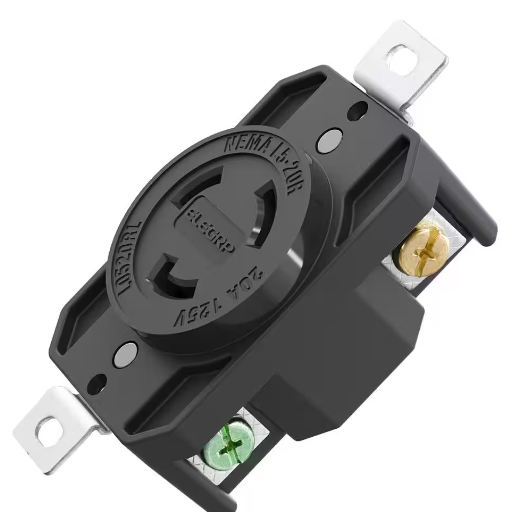
NEMA twist lock configurations aim to create an unbreakable and highly effective link in electrical systems. The locking element is responsible for that in the first instance and prevents the connection from being accidentally removed while the power supply is on. Due to the fact that each has fixed voltage, current and pin arrangements have different combinations and are specifically divesified in their different offered kinds. Everyone is not strange to this arrangement and that makes the system much easier to understand without taking too much time. Mostly utilized in commercial and industrial services, the NEMA twist locks serve the purpose long time connectivity in harsh conditions.
What is a NEMA Plug?
The NEMA plug is a standardized electrical connector that is used in the United States, Canada, and Mexico. NEMA plugs and connectors are available in several differentiated voltage and current combinations, allowing for their use in residential, commercial, and industrial applications. This plug can handle in the power system, attaches to the device, and a cord that is connected to the power source and includes a cap plug.
In the example provided, a NEMA 5-15 type of connection, one of the most commonly used, is found at 120 volts; one phase carries the transformer, and the other is rated at 15 amperes. In such a design, this plug is relevant when employing household appliances in the location. Constrastively, a NEMA L6-30, which is a locking plug rated at 250 volts and 30 amps, is used in high current installations in industrial areas. They are also resistant to normal wear and tear.
NEMA plugs are designed according to a specific standard to minimize the likelihood of mismatching or electrical accidents. The NEMA system has evolved over the years from a mere classification of connectors offering audio-video connectivity to a set of standards that ensure compatibility and safety across various electrical equipment and workplaces. And it is these properties that have made NEMA plugs an integral part of the electrical system in North America, affecting all equipment there.
Overview of Twist Lock Mechanism
The twist lock system has been devised for specific reasons, with the result that it’s designed to fit into residential electrical plugs and receptacles, preventing unplanned disconnection. Such an operation is activated by inserting the plug and then twisting the outlet nearest to the user, who then “locks” it in place. Furthermore, when the devices are implanted, the act of twisting ensures the strength of the connection. This feature comes in handy, especially when some movements or vibrations usually disconnect the plug and cause the block. In practice and other settings, the implementation of twist lock mechanisms in industrial and some commercial workplaces reinforces safety and prevents loose connections and power failures. The essentials of the twist lock elements have been standardized to ensure compatibility with components in various appliances and devices, making it easier to find a comprehensive and long-lasting solution for areas covered by high-power electrical systems.
Common NEMA Configurations
The configurations, provided by NEMA (National Electrical Manufacturers Association) to ensure commonality in electrical products, consist of a variety of plugs and receptacles. Such devices are designed to operate within different voltage ranges and current loads, and are specifically tailored to serve these particular applications due to the design of these plugs. For domestic use, NEMA 5-15 is considered the most popular, featuring two sockets in separate appliances, typically from the same manufacturer. The most common NEMA L6-30, on the other hand, features a twist-lock configuration, primarily used on construction sites where 250V and 30 amperes are acceptable. Each NEMA configuration is unique in every aspect, including the physical design of the prongs and connectors, to prevent unintentional mismatches of assemblies and ensure safety in the operation of the equipment within the system.
Types of Twist Lock Plugs and Receptacles
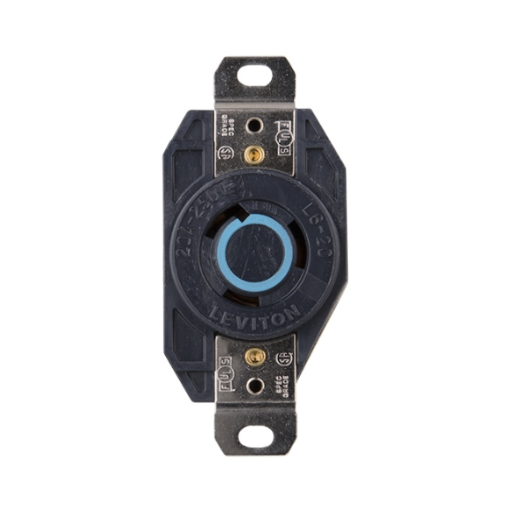
Twist lock connectors are rigid. Have you ever experienced an electric connector that is loose and keeps falling off with the slightest movement or touch? Reliable. Does not even get to the part of the design.
There are many elements covered by the perception, such as the best in the application of twist lock connectors. Below are popular designs, together with their electrical ratings:
The NEMA L5 is used for 125-volt power supply purposes. This is depicted in machines with lower power demand or domestic generators, which are always located at the power panel. Some of the standard configurations in this respect include the L5-15 and L5-20.
Then, the NEMA L6, where the power supply is at 250 volts, is more aggressive, typically used in sophisticated mechanical equipment such as HVAC and other systems. The typical kind is the L6-20, L6-30, and so on.
The configuration called NEMA L14 is rated at 125/250 volts, and as the title implies, this is suitable for split-phase systems. This would mean, for instance, locking power cords for house backup generators. Commonly applied types include the L14-20, L14-30, and others.
The L21 series performs a similar function, but for 3-phase 120/208V power distribution, and it is more commonly used in locations such as data centers or commercial buildings.
All these kinds and makes of connectors have a device that locks the connecting surfaces in position, thereby making operation more ideal due to the guarantee of a continuous connection for protection and security, even in home and industrial settings.
Locking Plugs Explained
Locking plugs hold great importance in the safety of various electric applications, as they provide a practical solution that eliminates the risk of accidental disconnection. They are high-quality, built-in protection systems, unlike any ordinary plug, which protects the connection between the plug and the receptacle as soon as it is coupled. This helps a lot in preventing issues such as safe and robust point-to-multipoint connections. Industries like construction, entertainment, and data center areas have many interruptions in power connections, where such plugs therefore play a significant role. These plugs can be used to prevent equipment loss during maintenance, eliminate electrical injuries, and make essential tasks safer.
Twist Lock Receptacle Variations
Different styles of twist-lock receptacles are available, which can be easily modified to meet the requirements for safety and convenience. The variation lies in Hershey’s designs, which feature poles and numerous wires, ensuring compatibility with any piece of equipment or power supply. For the sake of illustration, there are dual-phase connectors, the 3-wire design,n, and the 3-phase connectors; these are systems that use three cables per phase system, also known as a 4-wire system. By using colors or tags, the volt-ampere rating, as well as the voltage polarity, of twist lock connectors and female connectors, is readily distinguishable. The diversity of twist lock receptacle designs caters to the demands of different markets, such as healthcare services and factories, providing adjustability throughout use.
Choosing the Right Twist Lock Connector
When choosing the appropriate lock twist connector, several critical factors must be considered to select the most suitable one that is both compatible and safe. The voltage and current rating of the appliance is one of the most basic things that you should know, since using a connector with the wrong rating is dangerous and may result in damage to the equipment or harm to people. Pay particular attention to the requirements of that phase, e.g., single-phase or three-phase, as this will define the available choices of design. Additionally, consider external factors such as weather or environmental conditions. In the market, there are twist locks suited for extreme usage. Be sure to answer questions about identification information, such as labels, making it easy to distinguish between the plus and minus points. Examining these aspects helps you find a lock that suits your needs and is secure.
Wiring and Installation Considerations
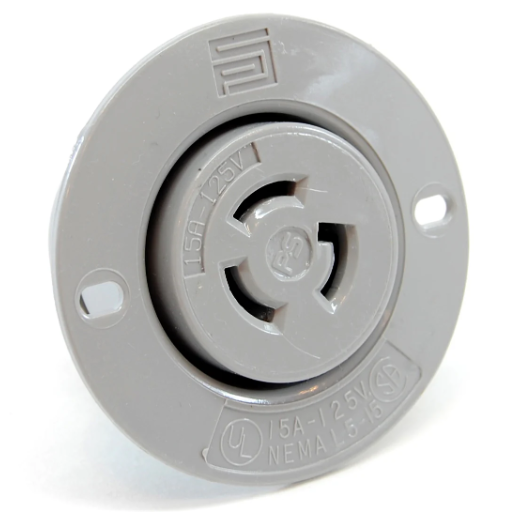
Always double-check that the power is turned off before working with and installing twist lock connectors. Pull off the insulating layer of the wires to the exact length suitable for that connector, as specified by the manufacturer. Reattach the wires to the proper terminals carefully, securely, and tightly, without concern for connecting thin wires that could produce loose wiring or potentially cause the system to malfunction. Ensure the connector lines up correctly to prevent any force when connecting. In conclusion, inspect the fully processed equipment for cracks, breaks, or any other issues that might be the reason it does not work as it should, and only then switch the equipment on.
Connecting a Locking Receptacle
How critical it is to secure connections inside the lock receptacle – the safety and usefulness of electrical connections depend on it. Power disconnection is one of the most serious safety concerns that can result from an untight fitting receptacle and accidental disconnection of power, which may also pose numerous potential safety issues. This matter is more severe in situations where there is a lot of movement, such as when using heavy machinery, and the conventional plugs run the risk of coming loose, whereas the locking plugs do not. Furthermore, a tight fit around all the receptacle cords and the connected devices helps to alleviate the chances of arc flashing or overheating and consequent mechanical injuries to the receptacle and the connected devices in such conditions. Proper mounting and routine maintenance work all contribute to keeping the receptacle fully operational for as long as it should be without putting both installed loads and users at possible danger.
Power Cord Configuration for Twist Lock
Now, twist-lock power cords made by a trusted company, such as Sinox, are commonly used in industry, commercial, or stage equipment appliances. A twist-lock power cord is a type of portable electrical connector that features a twist-and-lock mechanism, allowing the connector to be held firmly in place on the outlet even when in rotation.
Key Features of Twist-Lock Power Cords:
- Voltage and Amperage Ratings:
It is reported that twist-lock cords are designed to be functional under a broad range of electrical voltage and amperage ratings, typically from 120V to 480V and 15A to 50A, depending on the specific application.
For instance, a twist-lock could also be simply a wall plate that plugs into the wall; the only difference is that it has a special connector. As in the above example, a NEMA L5-30 outlet could be configured as a standard 125V 30-amp outlet, with the only difference being that it can be unplugged and taken with you. The Nema L6-20 is configured at 250 volts, 20 Amps, using specialized connectors.
- Pin Configuration and Safety:
Each twist-lock connector has matched pins, ensuring no misconnection occurs and preventing lost machines or possible electric shock.
This appearance of the plug body features insulation and bias that differ from those of an ordinary plug; it is such that the plug is self-engaging and does not easily fall out. Attachments of this kind are less likely to fail, deform, injure, or even overheat.
- Durable Materials:
The best materials used in making twist-lock power cords are durable and possess physical properties, including resistance to impacts, chemicals, and extreme temperatures.
- Applications:
Twist-lock in standardised format can be used effectively in erecting temporary structures and also in the foundation and excavation of new buildings. For example, after building new bathrooms, electrical power can be easily connected via clip-on adaptors that simply plug in. This adds a great deal of convenience and ease.
A good example of the application of a Twist-lock power cord is the use of overseas military generators. These are powered by generators, which automatically kick in when the power gets lost for any reason as a protective measure.
Comparative Analysis of NEMA Twist Lock Options
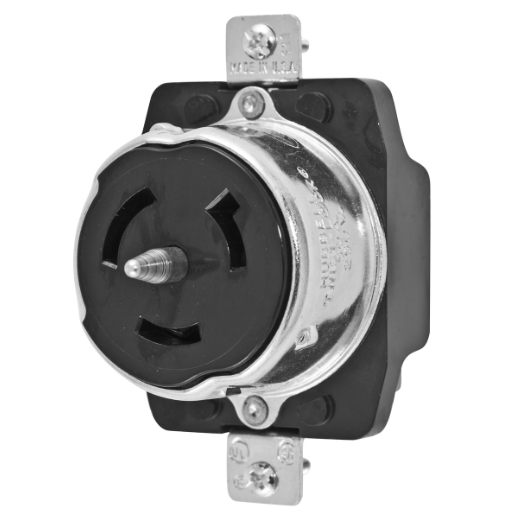
When discussing the NEMA twist lock diversity in terms of voltage, current and the reasons for use, to speak briefly on this, here are some of the most common configurations:
NEMA L5-30
Voltage: 120V
Current: 30A
Purpose: Can be best used for single-phase instruments that are small, e.g., a power tool or a backup generator.
NEMA L6-30
Voltage: 240V
Current: 30A
Use: Suitable especially for high-duty motors or equipment that operate at high voltages, such as industrial machines.
NEMA L14-30
Voltage: 120/240V
Current: 30A
Use: a fractional integrator used for portable generators, supporting two voltage sources for domestic and commercial purposes.
NEMA L21-30
Voltage: 120/208V
Current: 30A
Use: Manufactured to accommodate three-pass phase loads in commercial and industrial applications.
Selecting the proper NEMA twist lock, which has a higher multiplicity, is necessary to provide better adaptability and ensure safe operation with various electricity sources.
3 Wire vs 3 Pole Connections
The 3-wire connections are needed for each residential unit, each of which does not exceed 3.68 kW. At the same time, more than half of all newly commissioned residential buildings are equipped with three-phase electricity supply and technical accounting systems.
Detailed Comparison in Tabular Form
| Parameter | 3-Wire | 3-Pole |
|---|---|---|
|
Definition |
Conductors |
Switches |
|
Usage |
Power transfer |
Circuit control |
|
Phases |
Single/Three |
Three |
|
Neutral |
Optional |
Not applicable |
|
Ground |
Optional |
Optional |
|
Application |
Wiring |
Breakers |
|
Voltage |
Varies |
Varies |
|
Current |
Varies |
Varies |
Receptacle Chart for Quick Reference
|
NEMA Configuration |
Voltage |
Amperage |
Phase |
Typical Usage |
|---|---|---|---|---|
|
NEMA 5-15 |
120V |
15A |
Single-phase |
Standard residential outlets |
|
NEMA 6-20 |
240V |
20A |
Single-phase |
Power tools and small appliances |
|
NEMA L5-30 |
120V |
30A |
Single-phase |
RV hookups, generators, small machinery |
|
NEMA L6-30 |
240V |
30A |
Single-phase |
Higher-power equipment such as compressors |
|
NEMA L14-30 |
120/240V |
30A |
Split-phase |
Backup generators and transfer switches |
|
NEMA L21-30 |
120/208V |
30A |
Three-phase |
Commercial and industrial equipment with 3-phase power |
Determined by this chart, users are presented with an easy way of choosing an outlet type depending on the voltage, amperage, and phase being used. This implies that they are given a chance to select the correct power socket for their electric devices when working at home or office to enjoy safety and high performance.