Fast chargers are becoming the foundation of the new-age EV infrastructure, providing quick and easy energy to keep drivers moving. However, with the evolution of technology and the expansion of thin-level charging networks, the landscape is too complex for an EV owner or a charging infrastructure businessman to handle.
This guide simplifies the process of making fast charging in 2025, allowing you to make informed choices about EV charging options and technology. It will equip you with everything—a rundown of how fast charging works, where stations are located, and which stations are compatible with different vehicles, which might put you ahead in the fast-paced EV world. Whether you’re an EV owner or a business looking to enter the new age of mobility, this guide serves as your roadmap to mastering fast charging by 2025.
Overview of EV Charging in 2025
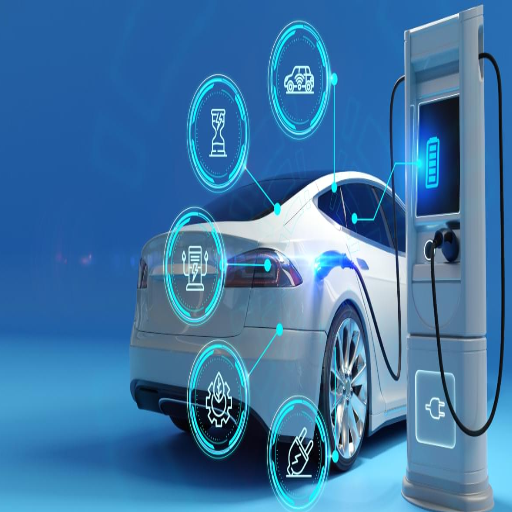
By 2025, charging facilities would be faster and more widely accessible, with universal integration into both urban and rural paradigms. Fast-charging stations are expected to be dominant, providing a fast charge in just minutes, less time than it takes to charge a vehicle for 20 minutes for most models. Public networks will likely evolve into more densely connected hubs, thereby establishing their presence in residential areas, workplaces, and travel corridors. Charging will also evolve technically, bringing greater compatibility between different EV models, alongside standardization efforts. In addition, many charging points will draw power from renewable energy sources, thereby promoting a greener approach to power delivery. This change marks the next significant step in making EVs a practical and convenient choice for everyone.
Current Trends in EV Charging
According to data from Google’s search engine, interest in ultra-fast charging stations has increased recently, highlighting a scenario where significant time is saved during vehicle charging. Many wish to find a charging station with a power output of 150 kW or higher, allowing an EV to gain a significant range within 15 to 30 minutes. The queries regarding wireless or contactless EV charging have also increased, indicating the curiosity and demand for more convenient solutions. Another noteworthy trend is the development of smart charging infrastructure, which allows owners to monitor and optimize their charge via mobile applications. Interest in community charging networks is growing, promoting greater access to charging, especially in suburban or rural areas. Such trends demonstrate how consumer preferences are evolving and the industry’s efforts to meet these changing needs.
Importance of Fast Charging
The faster the charging, the more it mitigates one of the primary concerns people have about acquiring an electric vehicle. Fast charging is, therefore, an exceptional ability to reduce the time spent charging EVs. While slow charging may take hours, stand-fast charging requires only a fraction of the time. A significant number of modern-day fast chargers can charge an electric vehicle up to 80% in about 20-40 minutes, depending on the model of the EV and the charger used.
A strong indication of the global increase in demand for fast-charging infrastructure comes from data supplied by various recent studies. A report from the International Energy Agency reveals a 48% increase in public fast chargers worldwide in 2022, indicating that the industry is indeed exploring faster charging capabilities. On the technology front, ultra-fast chargers with 350 kW and above outputs are also being developed to meet the charging needs of high-capacity batteries offered in next-generation EVs.
Fast charging adds weight to the argument of minimizing range anxiety, which remains a hindrance to EV adoption. So, fast-charging networks ensure that anyone with an EV can easily charge their vehicle quickly on a long road trip, making EVs more suitable for the average person. Considering the importance of fast charging, governments and the private sector worldwide are investing massively in the enhancement of fast charging networks. For example, the Bipartisan Infrastructure Law allocated $7.5 billion for EV charging infrastructure in the U.S., with a particular focus on installing fast charging stations along several major highways.
Fast charging, in the broader context, transcends mere convenience to become a factor that will shape the future of sustainable transportation by making EV ownership more practical and accessible.
Electric Vehicle Adoption Rates
Electric vehicle adoption rates have been steadily increasing over the past decade, driven by enhanced technical capabilities, government incentives, and a rise in public awareness about environmental issues. According to the latest State of the Industry, global EV sales surpassed 10 million units in 2022, marking a significant surge from previous years. According to Google search trends for EVs, interest is becoming more pronounced, with terms like “best EVs,” “charging stations near me,” and “EV tax credits” consistently growing across the board, being approximately equal in popularity. This interest is indicative of a shifting consumer mindset toward sustainability and vehicle ownership, wherein saving money on maintenance and operational costs over a vehicle’s lifetime holds priority. However, initial purchase costs weigh heavily on the consumer’s mind, and resolving such issues, along with the infrastructure deficit for charging, will help maintain this momentum. Together with this, through the policy framework and the industry, the world is well on track for the broader adoption of EVs and a greener transportation sector.
Fast Charging Stations
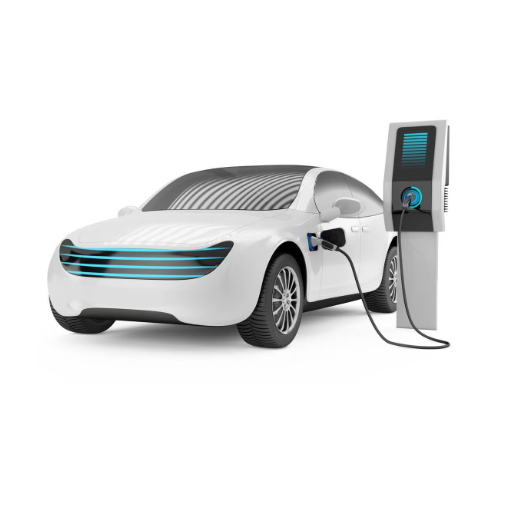
Fast charging stations form one of the most critical pieces of infrastructure for today, with the increasing number of EVs on the road. These charging stations promise speedier charge times than usual. Depending on the make, model, and battery of the EV, most fast chargers provide about 80% charge to the EV in under 30 minutes. These chargers are primarily installed on highways, in shopping centers, and in city areas for the convenience of EV owners. Building upon the existing fast-charging infrastructure will help reduce range anxiety and facilitate greater EV adoption.
Finding Fast Charging Stations
One way to locate the stations is to use smartphone applications or Google Maps. When one searches for a phrase like “EV fast charging stations near me” or something similar, Google Maps will almost instantly display options near the exact location, along with directions, reviews, and information about the charging speeds offered by these stations. Additionally, websites like PlugShare and ChargePoint maintain extensive databases of charging stations, incorporating input from their user base, as well as filtering options and updates on real-time availability. These will prove helpful to the driver in locating fast charging points when they are in unfamiliar territory.
Public vs. Home Charging Options
Short and precise response in a single sentence: Public charging will offer fast charging and flexibility on longer trips, while home charging will prove cost-effective and quite adequate for daily commuting.
| Key Point | Public | Home |
|---|---|---|
| Speed | Fast | Moderate |
| Cost | Higher | Lower |
| Convenience | Long trips | Daily use |
| Access | Public stations | Private setup |
| Setup | No installation | Requires setup |
Charging Infrastructure Development
The rapid expansion of charging infrastructure is imperative in supporting the growing adoption of EVs. Global reports have highlighted various data showing that the number of charging stations worldwide has grown significantly, with governments and private players investing in this sector. Google’s data indicates that in recent years, more people have searched for the locations of EV charging stations, as well as the reliability of the charging networks relevant to their areas. Many nations have established commendable programs to increase EV accessibility, including the installation of fast chargers along highways and within cities. In this way, they bridge the gap between public and home charging options by offering more flexibility to EV users who still have range anxiety. The support from policy to technology ensures the fast set-up of charging infrastructure to meet the needs of future EV markets.
Charging Costs and Considerations
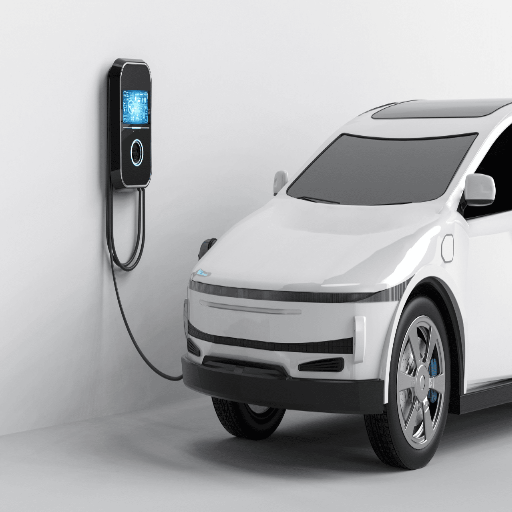
Naturally, the expenses incurred by charging an electric vehicle might encompass factors such as location, time of day, and the charger used. Charging at home is cheaper than public charging, given that it aligns with the electrical tariff for household consumers. In general, charging at home may cost between $0.10 and $0.20 per kilowatt-hour (kWh), which undoubtedly results in lower overall expenses than refueling a petrol car. Hence, if one decides to use public chargers, especially Fast Chargers, they must prepare to pay anywhere between $0.30 and $0.50 per kWh, depending on the charging network in question. Some charging networks also offer discounts for users through subscription plans or flat rates. To lower the costs incurred by charging, EV owners can charge their vehicles during off-peak electricity hours, should such be available.
Cost of Charging at Public Stations
The cost of charging an electric vehicle (EV) at public stations typically fluctuates per kilowatt-hour (kWh) of electricity, ranging from $0.30 to $0.50, as stated. According to recent Research, this rate fluctuates according to the charging network, geographic area, or even the charger being used —a Level 3 DC fast charger could provide a slightly higher rate than a slower Level 2 charger. It is worth noting that Tesla Superchargers typically average around $0.34/kWh, while other networks, such as EVgo or Electrify America, hover around the same range, with the occasional bump to a slightly higher rate at high-end locations.
Put it the other way around: at $0.40/kWh, a 60 kWh battery with an assumed 250 miles will result in a full charge cost for the driver of $24. That would be significantly cheaper than the same distance in a gasoline car, which could cost slightly over $40, depending on the price of gasoline. Public charging makes the most sense when drivers rely on it in conjunction with charging at home or at work at favorable electricity rates. For subscription users, such as fleets or those who frequently hit the road, network subscriptions are best. They can either lower the rate per session or offer unlimited charging for a monthly fee. Intelligent planning of charging sessions will pay off for every EV owner in cost management, coupled with the riding enjoyment that comes with going electric.
Home Charging Expenses
Home charging has always been one of the most convenient and cost-efficient ways for EV owners to charge their vehicles. It is reported that the average national cost of home charging ranges from $0.10 to $0.30 per kWh, inclusive of scenario variables such as local electricity rates and usage hours. For example, an EV with a 60 kWh battery capacity and an electric rate of $0.15/kWh would require approximately $9 for a full charge.
Many EV owners opt for time-of-use (TOU) rates offered by utilities to minimize the costs associated with home charging. The idea is to utilize off-peak hours demoted in demand and price. Thus, the benefits of reduced charging costs can be reaped by charging the vehicle overnight. Overnight charging can save hundreds of dollars per year for an owner compared to public charging rates.
Another price consideration is the installation cost of a Level 2 home charger. Installation, which typically depends on the electrical setup in the home and the type of charger being installed, may range from $500 to $2,000. Numerous states and utilities offer rebates and incentives to reduce these costs, thus making charging at home even more affordable over time. When combined with smart charging, these incentives maximize the savings for EV owners and make charging at home a genuinely economic proposition.
Comparing Charging Costs Across Levels
Concise Answer in One Sentence: The Level 1 chargers proved to be the most affordable, albeit slower; Level 2 is somewhat faster and moderately priced; Level 3 is the fastest but also the most costly.
| Key Point | Level 1 | Level 2 | Level 3 |
|---|---|---|---|
| Cost/kWh | ~$0.10 | ~$0.20 | ~$0.40-$0.60 |
| Speed | Slow | Moderate | Fast |
| Use Case | Home use | Daily charging | Long trips |
| Setup Cost | Low | Moderate | High |
| Convenience | Basic | Balanced | High |
Fastest Charging Solutions
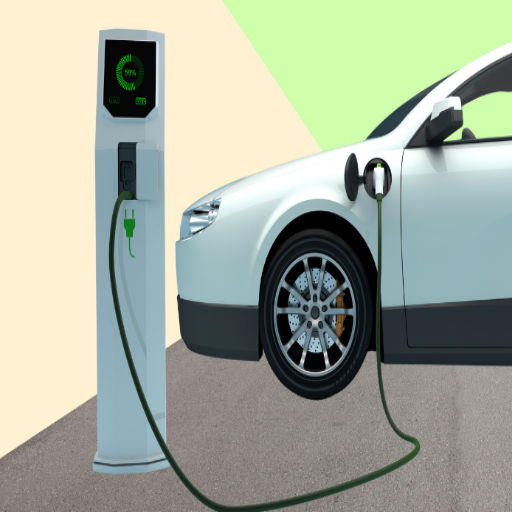
The fastest charging solutions for electric vehicles, DC fast chargers are commonly referred to as Level 3 chargers. Typically, depending on the charger’s power output capability and the vehicle’s battery capacity, an EV battery can be charged from zero to 80 percent in 20 to 40 minutes. They are typically located at charging stations along highways and in cities. Level 3 fast chargers are pricier than Level 1 and 2 chargers, but their speed is prized for long-distance travel, or quick top-ups when time is tight.
Fastest-Charging Electric Vehicles of 2025
The ongoing pursuit of faster-charging electric vehicles remains at the forefront of the automaker’s interests as battery technologies and charging infrastructure continue to evolve. Some of the fastest charging electric vehicles, as projected and current as of the year 2025, include:
- Lucid Air Pure – Bringing into play an advanced 900V battery architecture, the Lucid Air Pure boasts one of the fastest charging speeds on the planet, attaining 300 miles in just 20 minutes of charging on a high-power DC fast charger.
- Tesla Model S Plaid – This technological marvel of innovation also supports ultra-fast charging with the V3 Supercharger network, allowing for a 15-minute charge that covers 200 miles.
- Porsche Taycan Turbo S – A Porsche Taycan Turbo S charges its batteries from 5% to an 80% charge in around 22.5 minutes under optimum conditions, thanks to its efficiency and performance-oriented 800V technology.
- Hyundai Ioniq 6 – Hyundai’s latest electric vehicle boasts excellent charging capabilities, thanks to its E-GMP platform, and can recharge from 10% to 80% in just 18 minutes using a 350kW charger.
- Rivian R1T and R1S – The electric truck and SUV from Rivian also make it to the list, with the ability to gain 140 miles of range in 20 minutes at one of their proprietary Adventure Network chargers.
These cars serve as an example of how manufacturers have prioritized convenience over all else, reducing charging time to the point where it competes with the time taken for a fuel stop, thereby increasing the feasibility and appeal of electric cars for both casual and long-distance travel.
Charge Speed and Rate Comparisons
Charge speeds and rates can vary significantly across manufacturers competing to provide solutions that are faster and more efficient. Supercharger V3 stations from Tesla can charge at a rate of 200 miles in 15 minutes — a charge speed of approximately 13.3 miles per minute. Likewise, the new chargers, which override Rivian’s Adventure Network, permit 140 miles of range in 20 minutes, which is approximately 7 miles per minute. At the same time, other capable leaders, such as Porsche with its playful Taycan, claim an ultra-fast charging speed of roughly 60 miles of range in 5 minutes when using the 800-volt DC fast charger.
The most searched reasons or queries among users started with, “How do charging speeds vary between brands?” The answer stems from advancements in battery technology and the development of charging infrastructure. Newer vehicles with modern lithium-ion or solid-state batteries can take and accept high power charging levels, and a vast network of strong DC fast chargers can maximize the use of such capabilities. This explains why it is crucial to understand both the vehicle’s capabilities and the availability of a suitable charging station when selecting an EV.
Reference Sources
- Research and Development Review of Power Converter Topologies and Control Technology for Electric Vehicle Fast-Charging Systems
- Authors: K. Zhou et al.
- Publication Date: March 28, 2023
- Summary: This review paper discusses the advancements in electric vehicle (EV) fast-charging systems, focusing on power converter topologies and control technologies. It highlights the current state of EV charging infrastructure and the architectural configurations of fast-charging systems. The paper emphasizes the importance of high-power, fast-charging technology as a critical trend for the future of electric vehicles, providing insights into the design considerations for converters capable of handling hundreds of kilowatts (Zhou et al., 2023).
- A Comprehensive Review on Isolated and Non-Isolated Converter Configuration and Fast Charging Technology: For Battery and Plug-in Hybrid Electric Vehicle
- Authors: M. Annamalai, N. Amutha Prabha
- Publication Date: August 1, 2023
- Summary: This comprehensive review examines both isolated and non-isolated converter configurations used in fast charging technology for battery and plug-in hybrid electric vehicles. It discusses the operational principles, advantages, and challenges of various converter topologies, providing a detailed analysis of their performance in fast charging applications(Annamalai & Prabha, 2023).
- Top EV Charging Station Providers And Manufacturers In China
Frequently Asked Questions (FAQs)
What is DC fast charging and how does it work?
DC fast charging is a method of charging electric vehicles (EVs) that allows for significantly faster charging times compared to Level 1 or Level 2 chargers. This technology delivers direct current (DC) directly to the vehicle’s battery, bypassing the onboard charger and enabling higher charge rates. In 2025, many public charging stations are expected to feature DC fast chargers, providing EV drivers with a more efficient way to charge their vehicles during long trips quickly.
How do I find EV charging stations?
To find EV charging stations, you can use various mobile apps and websites that provide real-time data on charging station locations. Many EV charging networks, such as ChargePoint and Electrify America, have applications that allow you to search for public EV charging stations based on your location. Additionally, vehicle navigation systems often include functionalities to help you locate nearby EV charging stations.
What are the different levels of EV charging?
There are three main levels of EV charging: Level 1, Level 2, and DC fast charging (Level 3). Level 1 charging uses a standard 120-volt outlet and is the slowest option, making it suitable for home EV charging over extended periods. Level 2 chargers operate at 240 volts and provide a faster charging experience. DC fast charging stations offer the quickest charge rate, allowing vehicles to charge significantly in a short period, making them ideal for public charging.
What is the charging cost for electric vehicles?
The cost of charging an electric vehicle varies depending on the type of charger used and the local electricity rates in effect. Public charging stations may charge by the kilowatt-hour (kWh) or a flat fee per session. Many home EV charging setups can take advantage of lower residential rates, particularly when charging during off-peak hours. As the EV charging network expands in 2025, it’s essential to compare costs and consider free charging options available at specific locations.
What is the difference between Level 2 and DC fast charging?
Level 2 charging stations are designed for home or public charging and typically provide a charge rate of 10 to 60 miles of range per hour. In contrast, DC fast charging stations can add significant range in as little as 20 to 30 minutes, making them ideal for quick stops on long journeys. While Level 2 charging is perfect for overnight charging, DC fast charging is crucial for EV drivers who require a rapid charging experience while on the road.
What are the benefits of public EV charging stations?
Public EV charging stations offer numerous benefits, including convenience for EV drivers who lack access to home charging. These stations help to expand the EV charging infrastructure, making electric vehicle ownership more practical and accessible. In 2025, the growing number of public EV charging stations will improve the overall EV charging experience, allowing users to charge their vehicles while shopping, dining, or working.
How do I charge my EV at home?
Charging your EV at home can be done using either a Level 1 or Level 2 charger, depending on your needs and electrical capacity. Level 1 chargers utilize standard outlets, whereas Level 2 chargers require a dedicated circuit and offer faster charging. Many homeowners opt for home EV charging stations, which can be installed in garages or driveways, providing a seamless charging experience overnight.
What are the trends in EV charging for 2025 and beyond?
In 2025, we can expect to see significant advancements in EV charging technology, including an increase in DC fast charging stations and the development of charging hubs that cater to multiple vehicles simultaneously. Additionally, the integration of renewable energy sources and innovative charging solutions will enhance the charging infrastructure. As more people transition to electric cars, the demand for efficient and accessible charging options will continue to grow.