
Going outside for plumbing means that building strength, functionality, and beauty must be carried out simultaneously. Stainless steel spout and hose columns are revolutionizing outdoor faucets by ushering in a modern look that gives unequaled resistance to weather and wear. This blog post pinpoints and delves into the various features and advantages of the innovative design of the outdoor faucet ranging from sturdy construction to ergonomic efficiency. If you are a homeowner wanting to give the garden a facelift or a DIYer wanting great fixtures, this article will walk you through how a stainless steel spout and hose column will be a game-changer in any outdoor space.
Understanding Outdoor Faucets

Outdoor faucets are plumbing fixtures that discharge water for various outdoor activities, such as gardening, car washing, or pool filling. Ideally, an outdoor faucet should be sturdy, weatherproof, and easy to operate. The materials might include stainless steel or brass, so the works stay durable, resisting rust and corrosion. When evaluating an outdoor faucet, attributes such as the climate, water pressure, hose, or irrigation system compatibility come into focus. Once installed and maintained well, these attributes will also contribute to its long life and efficiency.
What is an Outdoor Faucet?
An outdoor faucet is a hydraulic device installed on the exterior walls of any building that allows access to water for outdoor activities. This fixture helps water gardens, cleans the floors outside, or even fills swimming pools. As the name suggests, these faucets are prepared for resistive duty in frantic environmental conditions that may include temperature extremes, UV rays, or weather-related damage. Latest and newer types of outdoor faucets are frost-free, a mechanism that keeps them from freezing during the chilly winter months, a common occurrence in areas with temperatures plummeting below 32°F (0°C). Per 2023 findings with home improvement experts, cases of frost-free faucets do fall by 70% due to pipe damage under freezing conditions. By installing water-wise faucets equipped with low-flow aerators, the water reduction rate can reach 30%, thus promoting the global campaign for conserving water resources. Another point to consider when selecting the perfect outdoor faucet is the material from which it is made. The most common are stainless steel and brass, both known for their resistance to rust and corrosion and for being fairly rugged in nature. To ensure more secure operation of the faucet, some newer units have an anti-siphon or backflow prevention device, so-called because they prevent tainted water from flowing back into the potable water supply. Such features have now been legally made mandatory in many countries. Another important aspect of using the tap is the installation; the installation should be done properly so that it runs smoothly for years. Further maintenance could invariably include checking for leaks, cleaning the faucet aerator, and insulating it during winter, which could someday give it an extended life with better efficiency.
Benefits of Using Outdoor Faucets
Counting the many advantages of the outdoor faucet for the sale of residential and commercial properties, here are five benefits that outdoor faucets offer:
- Convenient Access to Water
Outdoor faucets provide water at hand for watering plants, filling pools, and washing furniture or even vehicles. Carrying water from far-is-in-kitchen faucets can save time and effort.
- Lawn and Garden Care
With dry water access from outside, maintaining lawns, gardens, and landscapes becomes efficient. Hanging hoses or irrigation from outside faucets would ease daily watering jobs and ensure plants do well.
- Suitable for Cleaning Outdoor Areas
Outdoor faucets make cleaning patios, driveways, and tools simpler. Attaching a sprayer or pressure washer to the outdoor faucet would be great for power washing and cutting time on tedious processes.
- Cheap Solutions
More recently, these outdoor faucets utilize flow control or anti-drip technology to reduce water wastage; their outdoor applications, therefore, prove to be money makers. Even considering water conservation would be an ecological plus.
- Increase in Property Value
An attractive and functional outdoor faucet would add to the property’s charm and usability for buyers. Buyers consider outdoor faucets practical upgrades that could fetch the property a higher down valuation. Through such features, the outdoor faucet is a must-have and versatile feature in any outdoor maintenance regimen and chores.
Common Types of Outdoor Faucets
There are types of outdoor faucets commonly found in homes, such as hose bibs, sillcocks, and house hydrants. Another essential type that must not be ignored is the frost-free faucet.
|
Type |
Key Feature |
Use Case |
Climate |
Maintenance |
|---|---|---|---|---|
|
Hose Bibs |
Simple design |
General outdoor use |
Mild |
Low |
|
Sillcocks |
Extended pipe |
Prevent freezing |
Cold |
Moderate |
|
House Hydrants |
Low-maintenance |
Modern solution |
All |
Low |
|
Frost-Free |
Anti-freezing |
Winter protection |
Cold |
Low |
Features of Stainless Steel Spouts
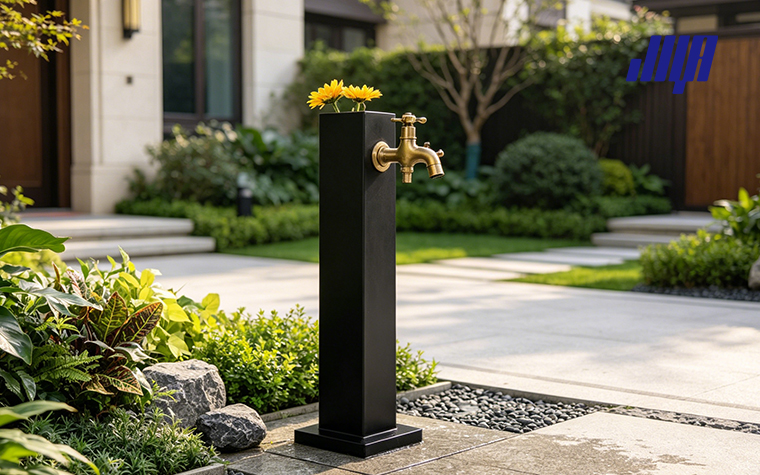
- Durability: Stainless steel spouts resist rust and corrosion and show the wear of time, making them the very best in durability.
- Hygiene: With a non-porous surface, stainless steel prevents bacteria from multiplying, keeping an object clean and safe for use.
- Appeal: Hence, they provide a sleek, modern look that complements all sorts of spaces.
- Versatile: Due to their solid construction, they can be placed indoors or outdoors.
Eco-friendly: Fully recyclable and sustainable, helping one make sustainable choices.
Advantages of Stainless Steel in Outdoor Environments
- Corrosion Resistance: Stainless steel can resist rust and corrosion brought about by the elements like moisture, humidity, and varying weather, hence is suitable for outdoors.
- Durability: Supplied with strength and toughness, it may resist wear, impact, and extreme temperatures, assuring a long life in any outdoor environment.
- Low Maintenance: Stainless steel is low maintenance thanks to its resistance to staining and its need for neither coatings nor frequent cleaning.
- UV resistance: Stainless steel will not deteriorate under UV radiation; it will retain structural integrity and good looks even when exposed to direct sunlight for a long time.
Recyclability: Stainless steel is 100% recyclable, demonstrating sustainability while retaining all the functional and aesthetic characteristics needed in outdoor applications.
Comparing Stainless Steel and Chrome Finishes
Corrosion-resistant stainless steel is durable and easy to maintain, whereas chrome boasts a shinier, lustrous finish but is less durable and susceptible to corrosion.
|
Feature |
Stainless Steel |
Chrome |
|---|---|---|
|
Durability |
High |
Moderate |
|
Corrosion |
Resistant |
Prone |
|
Maintenance |
Easy |
Demanding |
|
Finish |
Dull shine |
High lustre |
|
Cost |
Higher |
Lower |
|
Applications |
Industrial, durable |
Decorative |
Different Designs and Finishes for Outdoor Faucets
Outdoor faucets come in numerous styles and finishes, allowing customization for functional and aesthetic applications. Designs typically include simple spouts, frost-free types suitable for colder regions, and hose bibs for garden or utility requirements. Some modern designs encompass wall-mounted faucets with swivel spouts and sleek trough-style designs for contemporary aesthetics. On the other hand, the finishes span a wide variety, from polished chrome, brushed nickel, antique bronze, and matte black. Chrome types have an almost mirror-like, slick look and are easy to plug into any decorator’s palette. At the same time, brushed nickel finishes resist tarnishing and fingerprints, thus making it the finish of choice for sturdiness. Antique bronze provides a rustic flair, winning the hearts of those with more traditional ideas, and matte black embodies stark modernity in an outdoor setup. A finish is chosen based on how much maintenance it requires and its compatibility with the general outdoors appeal. It is critical to have a weather-resistant and very durable finish on an outdoor faucet to last.
Hose and Water Column Considerations

Hoses should be considered for durability and utility, while water columns should be kept safe from rust and corrosion. The water columns should have zinc-mild steel or highly weathering mild steel finishes. Also, a firm and stable connection between the water column and water supply should be ensured, with a suitable valve or tap available to control water flow.
Choosing the Right Hose for Your Outdoor Faucet
When choosing the best hose for your outdoor faucet, you should consider various factors, including materials, durability, flexibility, length, and other specifics. According to some recent views, the best hoses for long-term use are made from reinforced rubber or hybrid polymer materials because these are made to stand intense weather conditions and resist wear and tear. Rubber hoses can last for 5-10 years if maintained properly, and they come with pressure ratings of up to 150 PSI (pounds per square inch), ensuring good performance. Another important factor is flexibility. Expandable and coiled hoses are best for those who want something that stores away easily and fast yet will reach far enough when in use. Expandable hoses are lightweight and can expand up to three times their original length when water fills them. Therefore, they are popularly used for smaller spaces or by people who want a portable option. Hose length-wise, you should measure the distance from your faucet to the farthest area you’ll need to water. One standard tip is to pick a hose that is slightly longer than the distance. This makes working with it convenient yet not too hard to store away after use. Standard hose lengths are generally between 25 and 100 feet, with the majority agreeing that fifty feet is ideal for all-around use. Lastly, fittings and hose connectors should stand the test of time. Brass fittings are preferred for their resistance to corrosion and secure connections. Some high-quality hoses even test their durability with crush resistance. The final choice of your hose with matching modern prescriptions will ensure efficiency and durability for your outdoor water chores.
Understanding Water Columns and Their Functionality
Horizontal water sections may extend from the surface to the bottom of a body of water, such as a lake, stream, or ocean. This unique concept applies to hydrology, marine biology, environmental science, etc. Water columns are observed to comprehend the horizontal distribution of physical, chemical, and biological properties; temperature, salinity, oxygen, and even organisms vary markedly in the vertical direction. It is essential to understand the mechanisms that govern water columns to culture ecosystems, assess impacts from climate, and manage aquatic resources. Function-described water columns sit at the base of ecological balance and conduct the nutrient cycles that marine life depends on.
Freestanding vs. Wall-Mount Faucets
Freestanding faucets are easier to mount and offer flexibility, whereas wall-mounted faucets save space and provide a sleek look that can be set into a modern outlook.
| Feature | Freestanding | Wall-Mounted |
|---|---|---|
|
Installation |
Easy |
Complex |
|
Space Use |
Requires floor |
Saves space |
|
Aesthetic |
Flexible |
Sleek, modern |
|
Maintenance |
Accessible |
Challenging |
|
Cost |
Moderate |
Higher |
Faucet Installation Tips
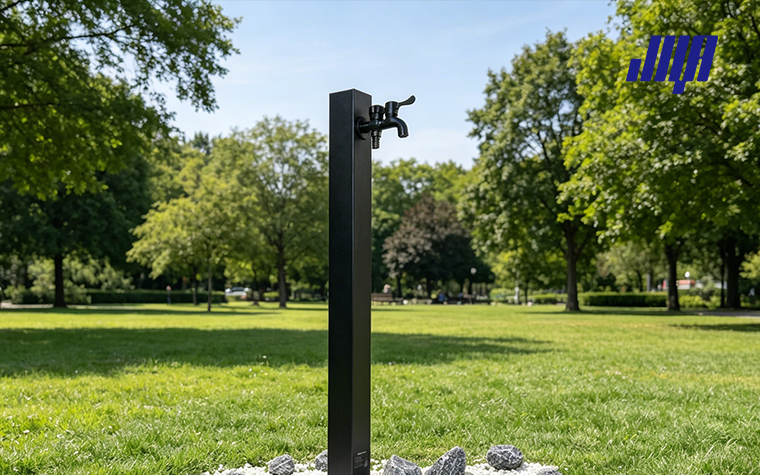
- Turn Off Water Supply
Before you begin any tasks, ensure the water supply to the faucet is shut off to avoid leakages and flooding.
- Prepare the Sink Area
Remove any debris or obstruction around the sink and ensure the surface is clean and dry for proper installation.
- Follow the Manufacturer’s Instructions
The installation guide accompanying the faucet was made to be followed carefully to ensure proper assembly and installation of all components.
- Check for Compatibility
Make sure that the faucet is compatible with the sink’s mounting holes and the type of mounting method, such as free-standing or wall-mounting.
- Secure All Connections
Secure all connections using the appropriate tool. Tighten them, but be careful not to overtighten, as you can break or grind the connections.
- Test for Leaks
Turn on the water supply and check for leaks on all connections. Adjust the connections accordingly.
- Seal the Surface Properly
Seal around the base of the faucet using a waterproof sealant to prevent water from seeping underneath.
Preparation for Installing Your Outdoor Faucet
Before beginning the installation of your outdoor faucet, gather the tools and materials you will need to carry out the operation. These mostly consist of a wrench, pipe cutter, pipe tape (Teflon tape), a drill, drill bits, sealant, and the faucet itself. Depending on the plumbing, you will require PVC, copper, or PEX pipes with fittings. Having everything prepared will make the process run smoothly and be less interrupted. Location selections for your outdoor faucet are essential. It must be reachable, using a nearby plumbing system to reduce installation complexity. Ideally, the faucet should face an open area for easy joining of garden hoses or attachment installation. Avoid locations with freezing threats or insulate adequately to prevent damage.
Common Installation Mistakes to Avoid
- Improper Pipe Slope
One of the many errors is not making sure the pipes are sufficiently sloped. If water never fully drains out of the pipe, it will freeze in colder regions, resulting in bursting and heavy repairs.
- Using the Wrong Materials
Another very common problem is using materials that do not withstand outside conditions. For instance, non-weather-resistant pipes or fittings may lead to premature wear, leaking, or rusting.
- Skipping the Shut-Off Valve
A crucial control measure is to install a shutoff valve. A shutoff valve allows one to cut off the water supply to the outdoor faucet during the winter or when maintenance is required, thus preventing leaks or freezing.
- Incorrect Insulation
If the insulation is inadequate or not done correctly, it can leave the pipes and various components of the faucet vulnerable to extreme temperatures. Proper insulation must be applied to all exposed areas to maintain the integrity of the system.
- Overtightening Connections
Over-tightening fittings and connections will crack and break them, especially plastics. Always keep to the instructions when connecting parts to avoid inflict damage.
Reference Sources
- The Modularization Using Prefabrication at the Pedestal Columns in APR1400
- Authors: Un-Yong Jang, E. Yee
- Publication Year: 2018
- Summary: This paper discusses modularization and prefabrication techniques in constructing pedestal columns for the APR1400 nuclear power plant. The study emphasizes the benefits of prefabrication in improving construction efficiency and quality(Jang & Yee, 2018).
- An SRAM-Based PUF With a Capacitive Digital Preselection for a 1E-9 Key Error Probability
- Authors: Yizhak Shifman et al.
- Publication Year: 2020
- Summary: This research presents a novel architecture for a Physical Unclonable Function (PUF) that enhances stability and reduces error rates in key generation. The methodology involves a capacitive tilt preselection test to identify stable cells, which could be relevant in discussions of secure installations in outdoor settings(Shifman et al., 2020, pp. 4855–4868).
- Reporting of the translation and cultural adaptation procedures of the Addenbrooke’s Cognitive Examination version III (ACE-III) and its predecessors: a systematic review
- Authors: Nadine Mirza et al.
- Publication Year: 2017
- Summary: This systematic review compiles various adaptation procedures for cognitive assessments, which may not directly relate to outdoor installations but showcase the importance of methodological rigor in research(Mirza et al., 2017).
- Top Column Faucet Manufacturer And Supplier In China
Frequently Asked Questions (FAQs)
What is the best type of faucet for an outdoor water pedestal?
The best type of faucet for an outdoor water pedestal is typically a deck-mount faucet designed to withstand outdoor elements. Look for durable materials like brass and features like a ceramic valve for reliable operation. Additionally, consider options with two handles for more precise water temperature control.
How do I choose the best faucet finishes for my outdoor water pedestal?
Consider aesthetics and functionality when choosing faucet finishes for your outdoor water pedestal. Matte black finishes provide a clean look while resisting water spots and stains. Other finishes like chrome or brushed nickel can also complement various outdoor designs. Ensure the finish is durable enough to withstand harsh weather conditions.
Are there easy-to-install options for outdoor column faucets?
Yes, many outdoor column faucets are designed to be easy to install. Look for models that come with a complete installation kit and clear instructions. Deck-mount faucets often require fewer holes and less complex setups than wall-mount options, making them ideal for DIY installations.
Can I control the water flow with a ceramic valve faucet?
Absolutely! A faucet with a ceramic valve allows for precise control of the water flow. Ceramic valves are known for their longevity and ability to maintain a steady flow of water, making them an excellent choice for outdoor water pedestals where consistent water temperature and flow are desired.
What materials should I consider for an outdoor pedestal faucet?
When selecting an outdoor pedestal faucet, consider materials such as brass or stainless steel for their durability and resistance to corrosion. These materials last long and maintain their appearance over time, even in varying weather conditions. If hard water is a concern, ensure the chosen faucet material can handle it.
What are the advantages of a two-handle faucet for outdoor use?
A two-handle faucet offers precise control over water temperature and flow. This is particularly beneficial for tasks like watering garden patio flowers, where you may want to adjust the tap water temperature. With a two-handle setup, you can easily customize the water for various uses, enhancing your outdoor experience.
How do I maintain my outdoor faucet to prevent water stains?
To prevent water stains on your outdoor faucet, regularly clean it with a mild detergent and water. Avoid harsh chemicals that could damage the finish. Wipe the faucet dry after use to minimize hard water deposits and stains. Choosing a faucet finish that resists water spots can also help maintain its appearance.
What is the difference between deck-mount and wall-mount faucets?
The primary difference between deck-mount and wall-mount faucets lies in their installation. Deck-mount faucets attach directly to the countertop or pedestal, making them easier to install and access. On the other hand, wall-mount faucets are installed on the wall and can save space but may require more complex plumbing adjustments. Choose based on your outdoor area’s design and functional needs.
How do I control the temperature of water with my outdoor faucet?
To control water temperature with your outdoor faucet, opt for a model with two handles. This allows you to mix hot and cold water to achieve your desired temperature. A faucet designed with a ceramic valve can provide smoother operation and more accurate temperature control, making it easier to adjust as needed for different outdoor tasks.
Tags

About the Author
Boda Pan
Engineer, JIYA Intelligent
Boda Pan is an engineer at JIYA Intelligent with five years of experience in outdoor power distribution. He specializes in RV power pedestals, water and power pedestals and marina water and electric pedestals, with a focus on IEC standards compliance.