
Considered to be the forgotten heroes of dock-side or marina-side electrical needs, marine power pedestals keep boats and yachts powered, safe, and operational. From upgrading an existing facility to shore-side power solutions suitable for a boat, it would be great to understand how these pedestals work and why they’re important. This guide covers all there is to know about marine power pedestals, key features, installation considerations, and how to choose the right one for your application. After reading through this article, you will be in a position to tell how these systems operate and why they are a fundamental part of any out-of-the-way waterfront.
Understanding Marine Power Pedestals

What is a Marina Power Pedestal?
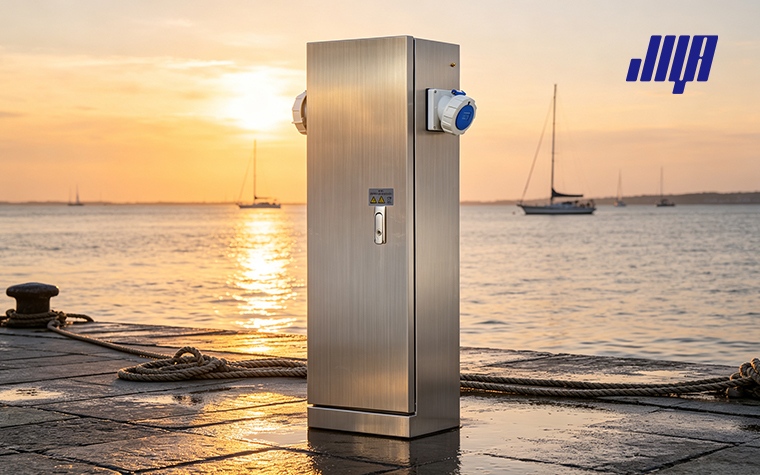
A power pedestal is an electrical fixture specially designed to supply steady power to boats stuck at a marina or waterfront. These pedestals are a must-have for any dock because boats require electricity for their lighting, appliances, battery charging, and other onboard gear. It is installed on either a fixed or floating dock and is made with marine-grade materials that can resist the harsh marine environment such as rains, water, salt, and temperature variations. Most power pedestals present multiple power configurations to suit various boats, with typical ones being 30-amp, 50-amp, or 100-amp service. Some may even come with additional features such as water hookups, phone and data connections, and metering systems for recording power consumption. Newer models could have LED lights installed for night-time visibility and safety when docking. The pedestals are essential and put to practical use in a marina, to ensure access to resources for the boat owner while docked. Besides the enhancement of the full marina experience, they promote safety by supplying clean and steady power directly to the vessels. Choosing the correct pedestal will depend on the size of the marina, the type of boats serviced, and specific power requirements.
Components of a Shore Power Pedestal
A shore power pedestal has certain components that are considered essential for a safe and reliable power supply to docked vessels. From the perspective of the pedestal itself, outlets provide electric connections for various power needs. These may be outlets for standard voltage options or may be outlets designed to handle larger capacities for larger vessels. The outlets are designed to provide a steady supply of electricity meeting standards of safety in a marina environment. Another important feature of the shore power pedestal is the integrated lighting system, where an Array of LED lights can be installed to illuminate kaspa at the dock at night. Lighting thus ensures smooth navigation in the marina and serves as a security measure. In some cases, the lighting sorties itself or varies ambient light, however, with different setup controls. Moreover, shore power pedestals may also supply water connections for the fresh water supply to docked vessels. Thus, these water connections are usually installed next to the electrical outlets for convenience. Some pedestals may also provide optional features such as communication outlets, smart metering systems, and charge points for new-type electric boats, all for the needs of the evolving marina and its user base.
Importance of Power Pedestals in Marinas
Power pedestals are instrumental in the smooth running of a marina. These units provide the docked vessels with power for various on-board activities like lighting, AC, or even refrigeration and battery charging. Without these pedestals, docked vessels would depend only on their internal power generation, which at times is not efficient and environmentally hazardous. Alongside electricity, modern power pedestals usually provide other utilities meant for the convenience and/or use of the marina users. For example, water hookups are provided with these pedestals, enabling boaters to refill their fresh water supplies with ease. Communication outlets and internet connections are now another feature being installed with power pedestals to tap into the high demand for connectivity by mariners. Such integrations make the mall environment more user-friendly and versatile, thereby observing the diverse needs of the boating community. The power pedestal’s role in sustainability of marina operation forgives mention. Lately, many newly-installed power pedestals have found themselves in smart meters, the priority of which is to maximize the efficient use of electricity by both marinas and boaters themselves. The other side is power pedestals with charging capability, hence greening technology-adoption routes for electrical boats. While this supports the environment, it will also cast marinas as future-forward bases for this form of boating.
Benefits of Modern Shore Power Solutions
Convenience for Boat Owners
These are modern, state-of-the-art shore power solutions that provide ultimate luxury to the boat owners while making the actual process of docking and powering their vessel quite straightforward. Featuring E-smart power pedestals, boaters can now gain power supply without shifting through old systems. These pedestals usually have digital interfaces so users can see the actual energy consumption, change their settings accordingly, and make payments immediately after. This integration allows for maximum reduction in manual readings and thus, limits the administrative work for the boat owners and marina operators.
Smart Features & Automation
There are also a lot of smart pedestals offering other automated features such as remote activation and mobile access, so that the power connections can be controlled by a boat operator through a smartphone app. With this functionality, they save time and ensure power is available whenever needed, thus creating further convenience in docking. In terms of safety, these systems are often designed with features like surge protection and alerts to faults in the system; thus, the boat owners can rest relatively assured.
Environmental Consciousness
It is harder to kill proper conduct with sustainable boating. When charging facilities are provided for electric and hybrid boats, owners will find it easy to keep their batteries charged and environmentally conscious in their energy utilizations. This improvement also lessens the burdens involved in charging but enforces the environmental conscience that is becoming interesting with respect to sustainable marine transportation. All these factors point to how modern shore power solutions make the experience more modern, with a finer focus on ease of working, efficiency, and environmental consciousness.
Reliability and Consistency in Power Supply
Uninterrupted and proper power are essential in any power supply system, more so in any industrial setting like marine transportation, wherein any delay may translate into loss of money or a hazard. Given this backdrop, the modern-day shore power system has been designed and engineered with advanced technology to provide uninterrupted and dependable energy transfer. Recent reports state that shore power decreases the vessel emissions by up to 98% while docked since the ships can altogether switch off the engines and rely solely on the steady electricity supply at the port. As the study conducted in 2023 shows, ports with high-capacity shore power facilities experienced 99.5% uptime reliability, meaning that shore power was consistently available. This was made possible by their integration with the smart grid, along with the ability to monitor themselves in real time and maintain, through backup facilities, power supply in case of outages. The shore power system can also cater to different power requirements; thus, cargo and cruise ships of all sizes can count on an uninterrupted power supply-providing power according to their operational levels. Innovations in better frequency converters and load-sharing technology are essential in keeping the system stable. These systems present the additional advantages of remote diagnostics and predictive maintenance, which reduce downtime and avert issues from happening. The combination of reliable service and cutting-edge technology shall ensure shore power solutions to support the emerging global push for sustainable and efficient energy use in the maritime operation.
Enhanced Amenities for Marina Users
Modern time assumes the elevation of clientele experience by offering an array of amenities that would firmly lock comfort, convenience, and safety. Many marinas now boast infrastructure that is top notch, including floating docks, secure mooring systems, and even areas dedicated to vessel maintenance. This gives boat owners, be it recreational or commercial, facilities that are dependable and that cater very well to their needs. Beyond that, modern marinas have put more focus on facilities that can attend to the human needs of their visitors, shower and toilet facilities, laundry areas, and lounges that offer comfort to allow users to relax. Beyond that, some marinas offer internet connectivity, restaurants, or even gyms to live up to the modern user’s expectations. A variety of eco-friendly methods-proper garbage disposal, recycling mechanisms, and clean energy use, among others-are in place to ensure sustainability and environmental conservation. Such conservation measures safeguard the adjoining marine ecology while simultaneously responding to the ever-increasing demand for sustainable and responsible maritime activities. Incorporated with usability, comfort, and sustainability are the enhanced marina amenities that lead toward an enriched user experience.
Technological Advancements in Marina Power
Smart Features and Remote Monitoring
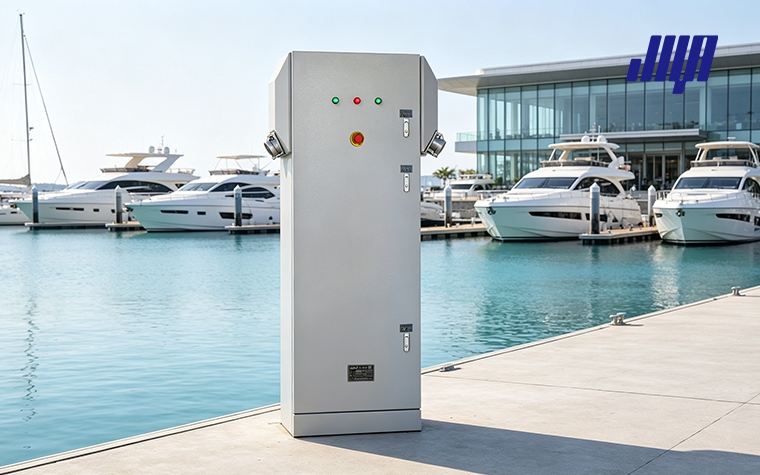
The integration of smart features and remote monitoring increasingly changes marina operations. While providing important pieces of real-time information about energy consumption, equipment status, and working conditions of the environment, such systems allow for the implementation of preventive maintenance with minimal downtime so that the facilities remain operative and efficient at all times. Remote monitoring benefits the end user as well, permitting boat owners to employ mobile applications or web-based platforms to activate and control power, lighting, or fuel services. No manual intervention is required; immediate alerts are issued to the user’s device in case of irregularities and alarms, thereby increasing safety and reliability. Moreover, the smart features add elements of sustainability by optimizing energy and limiting waste. When they operate automatically, they may ensure that power and water are not wasted if there is no occupancy, increasing excessive consumption and thus, the environmental impact. By ensuring ease of use, these developments become innovations in practical terms, setting the spotlight on environmental and operational concerns.
Energy Saving Capability of Shore Power Base
Shore power bases greatly minimize energy consumption by letting ships connect to electrical grids on land while at the dock, instead of powering their engines. More fossil fuel consumption always means more energy waste-and also increased operational cost for any shipping company. By depending on shore power, ships can efficiently take advantage of any available local renewable energy source forester port activities. Another point clarifying the benefits of shore power bases is that they help reduce greenhouse gas emissions generated by idling ship engines, which are big air pollutants. It has been reported that a single ship using shore power will prevent tons of carbon dioxide, nitrogen oxides, and sulfur oxides from entering our atmosphere every year. So, shore power poses a win-win option concerning energy efficiency and environmental issues, making it fit into the frame of global goals for sustainability. Integration of shore power systems also bears advantages for port authorities and local communities. Lowering noise levels from engines and air pollution, the nearby areas enjoy improved air quality, along with considerable calm. Along with energy savings, this joint approach to pollution mitigation renders shore power bases an essential tool of clean and efficient maritime operations worldwide.
Integration of Renewable Energy Sources
The integration of energy from renewable sources, such as solar, wind, and hydropower, into maritime operations, is one such major factor contributing to mitigation in greenhouse gas emissions and promotion of sustainable energy uses. With direct adoption of these energy sources, ports and ships will substantially lessen their reliance on fossil fuels, implying environmental health for the locals and marine ecosystems. Any such process setting the precedent is the installation of on-site renewable energy systems at the port, for example, solar panels or wind turbines, which produce electricity for a shore power system. This option diminishes conventional power generation, allowing the ships to use this clean energy while loading and unloading. Accordingly, their operational emissions are decreased, and therefore, reductions in overall energy costs are witnessed with the passage of time. Moreover, the integration of renewable energy brings in more environmental and economic benefits. Using sustainable energy sources lessens the carbon emissions associated with maritime operations and satisfies certain internationalistic ecological commitments. It promotes the advancement of green technologies and thus paves the way for the prospect of new energy solutions and their profitable implementation in the maritime industry.
Choosing the Right Marine Power Pedestal
Factors to Consider: Power Capacity and Durability
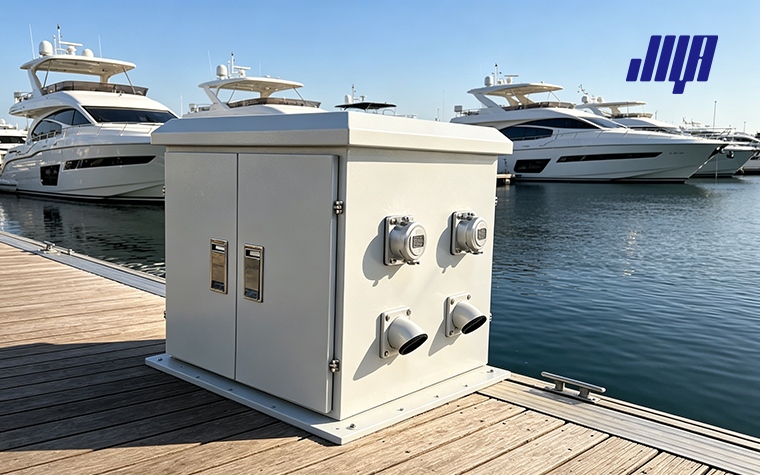
Power capacity represents one of the most critical factors to compare when selecting a power pedestal for a marine facility. The power pedestal must reliably provide for the electrical load requirements of all docked vessels. With regard to the boats that will be using the pedestal, it is important to determine general power requirements, including lighting, appliances, and any other on-board systems. Common ampere settings on power pedestals are 30 or 50 amps, but for larger boats, pedestal models with ratings of 100 amps or above may be necessary. Durability of a power pedestal is of equal concern in marine environments, where it is subjected to bad weather, saltwater etching, and heavy usage. Using superior grade materials such as stainless steel, or polymers with UV resistance qualities, will ensure that such a power pedestal ought not to succumb to corrosion, UV degradation, and physical degradation with time. Choose power pedestals that have weatherproof enclosures, and carry certifications indicating compliance with marine electrical standards. Also, the endurance of the pedestal needs to be considered for long-term value; this requires a look at the maintenance requirements and the lifespan. The exchange of cheaper ones every now and then can be avoided if one goes for a rugged one of a low-maintenance sort, which will give flawless performance over the years. Always give due consideration to renowned manufacturers and try to get some real-life feedback in terms of reviews or testimonials on how long the product lasts in use and if it can be relied on.
Compatibility of shore power base with existing infrastructure
The compatibility of a shore power base with an already existing infrastructure depends on numerous elements. Firstly, the voltage, frequency, and power level of the shore power base must be commensurate with those of the existing infrastructure. Should there be any mismatch in these parameters, it could cause operational problems, impinging on efficiency or even risking damage to equipment. Next, there is the question of physical connections, or plugs and receptacles. From the design standpoint, these must adhere to accepted standards to guarantee secure, uniform, and reliable transfer of power. Should a particular shore power base use a non-standard design, an adapter or some other piece of equipment could be necessary, adding to cost and complexity. Lastly, infrastructure upgrades may be necessary if the existing system cannot meet the power demand of the shore power base. Assessing the current capacity of electrical cables, distribution boards, and transformers is crucial before installation. In addition, these should observe local regulations and international standards since such observation is fundamental to long-term safety and compliance. Proper planning and consultation with professionals will allow smooth integration and less disruption.
Practical Tips for Marina Operators
- Plan for Power Needs in the Future: Look into the possibility of growth of the marina and the concomitant increase in electricity demand from modern vessels when shore power systems are being installed or upgraded. Learn the present trends of usage and then forecast from there so that frequent upgrades would not be needed. Talk to industry peers or go for some solutions that can scale to meet those changes efficiently.
- Ensure that the Regulatory Bodies Make You Compliant: Know your safety standards and environmental requirements at the local, national, and international levels. Proper compliance with laws shall be ensured for the facility’s safe operation but will also limit the threat of its owners and operators being charged at some time for a negligent act. Work with the certified persons to verify that the installation of shore power adheres to governing codes (IEC standard, local safety guidelines) and regularly audit your systems for continuing compliance.
- Implement Routine Maintenance: Plan a routine maintenance session for the shore power system to assure the long-term operational viability; for instance, in their regular inspection, they should make sure wear and tears never affect any electrical cable, connector, or distribution board. They should immediately replace or repair anything found damaged to avoid costly downtimes. Training should also be offered to allow marina staff to identify early signs of issues and respond accordingly.
Environmental Impact of Shore Power Pedestals
Supporting Sustainable Marina Operations
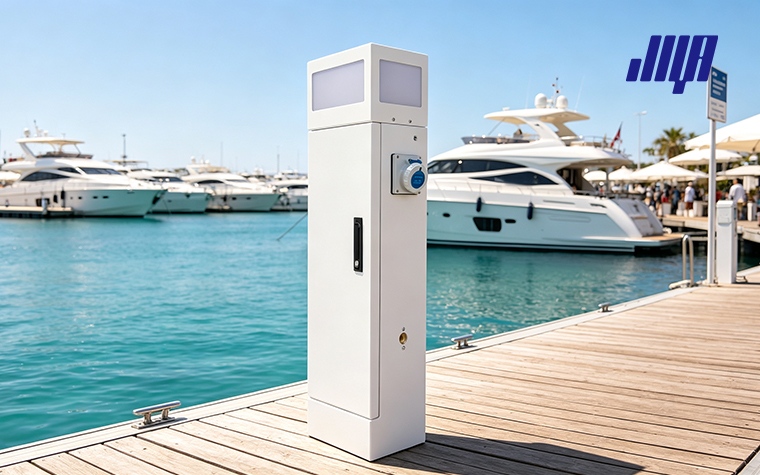
Electricity supplied through shore power pedestals helps to promote the sustainability of a marina by reducing carbon emissions and dependency on diesel generators. These vessel-side shore connections provide electricity generated by the grid, which is relatively cleaner, whereas vessels using generators would have released a lot of air pollution in the atmosphere. This change is considered toward compliance of marinas with different environmental regulations and the global push towards salving climate change. Another downside to diesel power generators is that their operations are very loud, distracting noise to marine organisms. Noise noise noise-not like that shore power strikes for a great marina ambiance. Being maintained properly along with the use of energy-efficient features will also ensure sustainability. Contemporary shore power pedestals, equipped with energy management systems, actively aim at reducing electricity consumption and its associated wastage, thereby resulting in lower operational costs. By encouraging boaters to use the system in an environmentally friendly way, marinas can do their part in support of ecological stewardship and preservation of marine habitats for future generations.
Reducing Energy Consumption
Energy reduction in marinas is imperative toward encouraging sustainability and diminishing operational expenses. One method worth implementing is upgrading shore power pedestals with an energy management system. These systems help monitor and govern electricity consumption so as to prevent waste and efficiently supply power to the boats. Boaters are also coaxed to develop energy-saving habits, such as switching off their electrical appliances when not in use, using solar panels for auxiliary energy needs, and lighting with LEDs rather than with traditional incandescent options. Awareness-raising campaigns by the marina could support these initiatives and nurture a conservation culture within the boating community. Finally, developments in renewable energy sources, such as harnessing solar or wind power, can drastically lessen its use for non-renewable electricity. Marinas with renewable energy installed in their infrastructure serve as symbols of ecological wisdom and goodwill towards the environment. Through technological improvements, user awareness, and investments in sustainable sources of energy, the marinas can make a serious dent in their energy footprint with a supporting tilt toward ecological recovery.
Eco-Friendly Designs and Practices
Ecological designs and practices in the marina simply mean minimizing environmental impact and at the same time fulfilling functional and user requirements. This would entail areas of attention such as sustainable building materials, green infrastructures, and policies favoring conservation. For instance, materials like recycled composites and hardwoods derived from renewable sources supplant materials of the traditional kind, thereby lowering the marina’s carbon footprint. Besides that, employing permeable pavers along walkways and parking areas will curb runoff pollution and save neighboring marine ecosystems. Water conservation and management are of paramount importance in eco-friendly marina design, another crucial goal. To guarantee that contaminated water from boats or marina operations does not pollute natural waterways, it is thus necessary to have modern wastewater treatment systems installed. Rainwater harvesting systems may be the other option: these systems would collect rainwater for reutilization in general cleaning activities or for irrigation. Through these means, a marina, by its own operations, ensures that local water quality and resources are preserved. Renewable energy promotion is another key development in sustainable marina practices. Clean and renewable sources of energy through solar panels and wind turbines can be provided for lighting, charging stations, and other uses within the marina. Charging stations for boats promote the usage of electric or hybrid vessels to further reduce fossil fuel dependence. Through the use of these environmentally considerate designs and practices, marinas go a long way toward protecting the local ecosystem while serving as an example of environmental responsibility within the boating community.
Frequently Asked Questions (FAQ)
Q: What are Marina Shore Power Pedestals, and Why Are They Important?
A: Marina shore power pedestals are power units that supply electrical power to any boat or recreational vehicle (RV) at the dock and marina. They establish a safe and secure electrical connection to a power source, which can be used for various purposes such as lighting, appliances, and charging systems. Modern units include the utmost safety features, such as circuit breakers and ground fault interrupters-all designed to resist harsh marine environments and provide protection to the electrical system as well as to the users.
Q: What are safety features I need to look for on marina shore power pedestals?
A: When choosing shore power pedestals for marinas, one should factor in safety features such as circuit breakers and ground fault protection. These features prevent overload and help reduce the risk of electrical shock in the presence of moisture. The current generation of units is often designed to resist corrosion, thereby ensuring that they will last longer and be more reasonably reliable when subjected to severe weather conditions that marinas are always exposed to.
Q: How do shore power pedestals distribute power in a marina?
A: Marina shore power pedestals contribute greatly to the distribution of power by placing multiple connections at docks and marinas. The pedestals can be installed in many power configurations depending on the size and power rating required by vessels. Thus, marina owners can effectively manage dockside power distribution and ensure that the boats are all supplied with power specific to their requirements.
Q: Are there any special benefits provided by modern marina shore power pedestals?
A: The modern marina shore power pedestals will ensure greater safety with their advanced electrical features, while also ensuring quality electrical connections opposed to being degraded by harsh marine conditions. The power pedestals also encourage power system upgrades so that marinas and RV parks can keep up with changing electrical demands, thereby providing the user with a continuous source of power.
Q: Can marina shore power pedestals be customized according to power needs?
A: Yes, shore power pedestals for marinas are custom-designed to allow buildings of various configurations and sizes. Marina owners can ensure different amperages are supplied for each boat or RV to access power appropriate to their needs. It is of utmost importance to have variability and adaptability in catering to the myriad electrical systems in marinas and RV parks.
Q: Are weather conditions affecting the operation of marina shore power pedestals?
A: Weather conditions can affect the operation of marina shore power pedestals to a great degree. In all harsh environments, the units are expected to undergo corrosion, extreme temperatures, and moisture. Investing in the expensive, weather-resistant pedestal guarantees operation and safety in any situation.
Q: What are things that marina owners must consider before making a choice for shore power pedestals?
A: A marina owner should consider power requirements of the electrical system, safety features, and marine conditions under which shore power pedestals are subjected. It is also required to study the arrangement of the marina ot ensure power will be distributed efficiently and will be accessible to all boats berthed therein.
Q: How do advanced power pedestals vary from traditional power pedestals?
A: The main difference between an advanced power pedestal and traditional units lies in safety and power characteristics. Modern units consist of features like circuit interrupters and high levels of weather resistance to ensure a safer connection from a reliability point of view. These qualities make them suitable for the rigors of the marine environment while still providing the user with a dependable source of power while docked.
Q: What do dock boxes do along with power pedestals set on the shore-do?
A: Dock boxes are storage cabinets that keep the electrical connections and cables used for safely organizing the distribution of power from marina shore power pedestals. They would protect the wiring and connections from weather conditions to keep the electrical system working and safe. These dock boxes enhance the safety and efficiency of the dockside power system when used together with power pedestals.
References
-
Marina Shore Power Pedestals: Importance of Modern Units – Power Pedestal
Discusses the role of power pedestals in providing utilities like electricity and water to docked boats. -
5 Benefits of Shore Power – Dock Boxes
Highlights the efficiency, sustainability, safety, and cost-effectiveness of modern shore power systems. -
Shore Power System and the Benefits – Atlas Marine Systems
Explains how shore power systems reduce operating costs and provide global electricity access for boats and yachts. -
Ship to Shore Power: 5 Exciting Reasons Why It’s Time to Invest – Wärtsilä
Covers the environmental and operational benefits of investing in ship-to-shore power connections. -
What is Shore Power and Why is it Important? – Igus Toolbox
Provides an overview of shore power and its importance for ships, RVs, and other heavy-duty vehicles.

About the Author
Boda Pan
Engineer, JIYA Intelligent
Boda Pan is an engineer at JIYA Intelligent with five years of experience in outdoor power distribution. He specializes in RV power pedestals, water and power pedestals and marina water and electric pedestals, with a focus on IEC standards compliance.