
When it comes to powering boats and RVs, reliability and safety should be key factors. Marina power pedestals come in as an important solution for providing safe and convenient access to electricity for docks, marinas, and RV parks. Whether you are tying up after a long day on the water or getting set up at your favorite RV park, these pedestals will help ensure you have enough power to run your appliances and charge your devices. This post will move into the importance of marina power pedestals and what features distinguish them from others, ultimately improving the overall experience for boat and RV owners. Read on to get an idea of why these essential power solutions must feature in every modern waterfront facility and park.
Understanding Marina Power Pedestals

What Are Marina Power Pedestals?
Power pedestals in marinas are specially designed electrical units so that watercraft can have dependable shore power at marinas, docks, or other waterfront facilities. These pedestals are offered in different power configurations, from 30 to 100 amps, to meet the varied energy requirements of boats, from smaller recreational crafts to large power yachts. They also sometimes provide water hookup, hose bib, lighting, internet, metering for power usage, among other things. Modern marina power pedestals are constructed for durability, using stainless steel and heavy-duty plastic materials that stand up to the unforgiving marine environment.
With smart features now integrated, the advanced pedestals give marinas options for remote control of power distribution and give owners Roman tracking and payment convenience via app integration. On top of the technical fit, most pedestals are designed to look attractive, with slim profiles and customizable lighting systems that would maximize beautification opportunities for the waterfront. A combination of elegance and utility makes marina power pedestals a major facility in any modern boating dock.
The Role of Power Pedestals in Modern Marinas
Power pedestals represent a modern tool in the enhancement of operational efficiency and user experience. They provide fundamental services, such as electrical power, water, and sometimes even internet connectivity, allowing boat owners to enjoy whatever amenities may be necessary for the smooth running of the program.
The latest power pedestals, with the installation of smart technology, empower marina operators to supervise and regulate power usage remotely, therefore adding to convenience. There is real-time monitoring of electric consumption, contactless payments, and various other customized options open for service, fostering convenience both for marina managers and their clientele. LED-based illumination systems are generally installed in contemporary power pedestals with various color variations to ensure dock safety after sunset and to establish an exciting ambiance for the marina. Eco-friendly materials and energy-efficient components satisfy the current trend for industries going green in the marine trade.
Importance of Reliable Shore Power for Boaters
Reliable shore power is essential for boaters. It gives them steady electricity to power their vessels and support their onboard systems while docked. Modern boats carry numerous energy-dependent systems such as air conditioning, refrigeration, navigation, and entertainment. In the absence of reliable shore power, the boaters will face challenges such as battery depletion, system malfunctions, or even safety hazards because of inconsistent voltage supply. A power outage or irregularity in voltage may also be able to attain physical damage to onboard equipment, thereby inviting hefty repair charges. To effectively counter these issues, marinas have already begun to incorporate more modernized shore power improvements, such as pedestal systems equipped with surge protection, energy monitoring, and fault detection features. Moreover, smart energy management systems are also increasingly being adopted by marinas. The systems focus on efficiency and safety while ensuring sustainable energy practices, such as linking with renewable energy sources, or providing charging stations for electric and hybrid vessels. For boaters, reliable shore power sustains onboard comfort and convenience while guaranteeing the system’s long-term integrity and durability. Onboard facilities that are well-supported and reliable make for an uninterrupted, enjoyable water experience, which is why investing in next-generation shore power solutions is the best way for marinas to attract and maintain modern-day boaters who expect a high level of service.
Functionality of Marina Power Pedestals
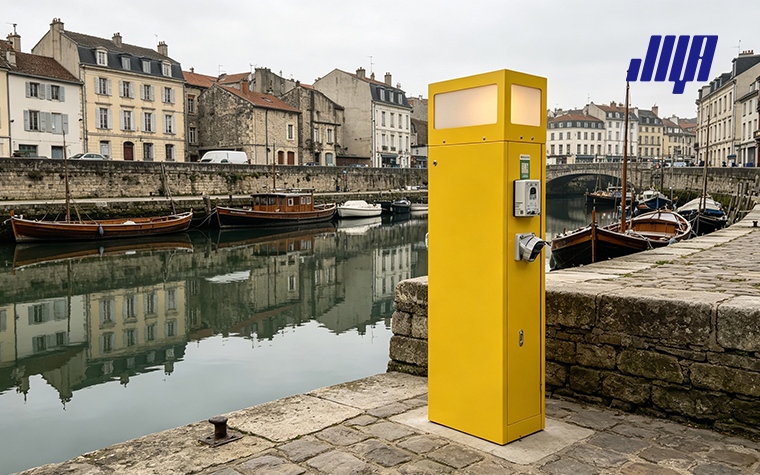
How Marina Power Pedestals Supply Electricity
Marina power pedestals are critical pieces of infrastructure that provide the efficient and safe delivery of electricity to docked boats. These power pedestals are connected to the marina electrical grid, consisting typically of transformers, distribution panels, and grounding systems for reliable power supply. Modern power pedestals may include circuit breakers, surge protection, and some advanced safety features, depending on design, to mitigate potential electrical hazards.
Moreover, many of these modern marina pedestals are incorporating smart technology that offers remote monitoring and energy management functions. With such a system in place, marina operators will be able to track energy consumption and distribution optimization in real-time. They allow green options, too, by featuring eco-conscious technologies. LED lighting lighting for night visibility, recycling-friendly water stations, and green energy power source from systems such as solar panels are some of the available features most favored by eco-conscious marinas. Putting money into such technology thus ensures that the marina is not only sustainable but also up there among today’s boater’s first choices.
Water and Utility Supply to Docked Boats
The supply of water and utilities to docked boats is a point of interest. On time and money were spent to ensure that the experienced would be smooth and comfortable for any docked boat and its owner. Modern-day marinas are increasingly built with top-grade water-distribution systems, thereby supplying clean and potable water at all docks. The latest filtration technologies will be employed in these systems to meet health and safety standards of boating communities at certain frequencies. Utility connections, such as electricity, form a very necessary component of marina infrastructure. Power from electrical pedestals at every slip is provided for use in lighting, electrical equipment onboard, and battery charging, catering to all types of boats and all requirements. Many marinas that have implemented energy-efficient solutions, such as LED lighting for pier illumination and solar-powered utility stations, should have answered this concern on the environment, along with providing reliable services for their clientele. With this, it appears that waste pump-out stations are another growing necessity for the amenities provided by marina clubs, the sojourners who invest in such conveniences paying more for their satisfaction by reducing the ecological footprint and staying competitive in the boating industry.
Safety Features of Dock Power Pedestals
Dock power pedestals offer multiple safety features meant to protect both boat owners and the boats. Among its safety features are the so-called Ground Fault Circuit Interrupters (GFCIs), providing even essential protection against shower-based electrical shocks by disconnecting the power-kickwhen it detects imbalance in the incoming electrical current. Hence, any faulty wiring or water quirk will less probably cause any mishaps. These days, pedestals come with surge protection as well, so the onboard sensitive electronics would not be subjected to voltage irregularities or lightning strikes. Meanwhile, most of the designs of the pedestals include weatherproof enclosures and corrosion-resistant materials to be safe in harsher marine environments, thereby preserving the integrity of safety features over time. LED indicators also become common features, aiding boaters in obtaining an instant status of the electrical connection, such as power availability or detecting faults.
Further safety enhancement is achieved by the use of flame-retardant materials in designing, which reduces the possibility of fire hazards should adverse conditions arise. This has not only enhanced safety but, by improving the overall user experience, has turned into selling points for marinas from where many eco-conscious and safety-minded boaters derive their interest.
Maintenance Practices for Longevity
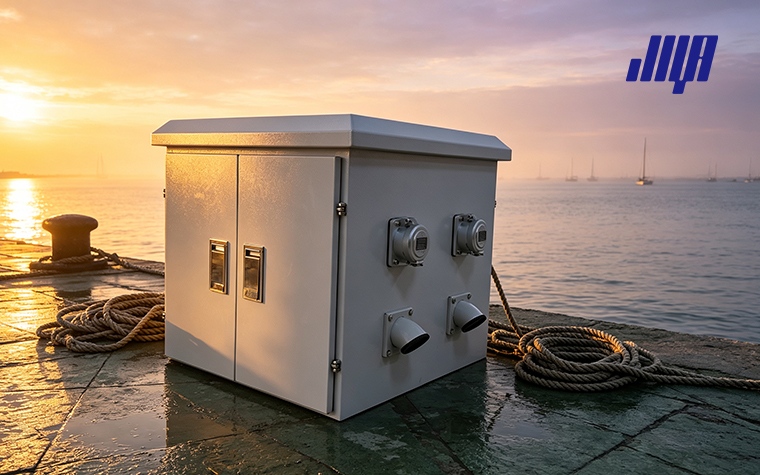
Regular Cleaning and Inspection
These inspections and cleanings would ensure that power pedestals and the related infrastructure in the marina work both safely and efficiently until their projected lifespan. Dirt, salt, and other residues may accumulate to bring corrosion or impair connectivity. Cleaning with non-corrosive cleaners followed by fresh water cleaning is thus recommended for power pedestals, particularly in saltwater environments. Another equally important role is that of inspections. Continuous monitoring of cables, breakers, and connectors should be undertaken, as any slight wear and tear can lead to devastating failures, or worse, create safety hazards. Hot spots in electrical components can be detected by the technicians through thermal imaging cameras, thereby preventing further overheating or fire hazards.
Having records for every cleaning and inspection activity of a certain level is very useful in spotting trends and acting quickly on new issues; therefore, operational efficiency and cost control would benefit here.
Maintenance Tips for Optimal Performance of Dock Power Pedestals
- Regular Cleaning and Visual Inspections: Dock power pedestals need to be cleaned often to avoid the buildup of salt, debris, and grime. Do not use any corrosive agents and avoid high-pressure water jets that might damage the finish. Carry out inspections to check for any indication of wear, corrosion, loose connections, or crack components. Addressing them at an early stage could avert costly repairs or total failure.
- Test Electrical Components Periodically: Perform tests on GFCI breakers, outlets, and other electrical components on a routine basis to be sure they all function properly and adhere to safety standards; if any component gets damaged or ceases to function correctly, it should be replaced immediately as a faulty component will prevent proper power delivery and may cause an unsafe environment.
- Protect from Environmental Damage: Install protective covers or coatings to help dock power pedestals last longer by protecting them from harsh weather conditions, UV rays, and saltwater corrosion. Tightening any loose fitting or hardware will also minimize movement in strong winds or tides, thereby reducing wear.
By adopting these maintenance tips, the marina operators will be able to ensure maximum efficiency and longevity of dock power pedestals while providing for reduced operational costs and increased safety for all users.
Solve Common Problems of Dock Power Base
Dock power bases are critical to power distribution at modern docks. However, like any infrastructure, these are prone to recurring issues that might hamper their functionality if not attended to at the right time. Given below are some prevalent problems and remedies: backed by data, and the latest technology can help.
- Component overheating: Heat can destroy circuits and shorten the lifespan of the dock power bases. The recent developments in the industry show that most instances of overheating happen due to poor ventilation or excess power draw. The solutions to this may include using heat-resistant wiring, designing arrangements for good airflow around the bases, and implementing some form of thermal monitoring system. It is reported that, if cooling measures are put in place, it could prolong the life of a critical component by up to 30%.
- Corrosion of electrical connections: Moisture, saltwater, and harsh weather conditions corrode connectors and terminals. Recent reports by maintenance authorities indicate that corrosion causes about 25% of power base failures in docks located along the coast. The best defense against this is to ensure the application of anti-corrosion paints at regular intervals and use marine-grade stainless steel for the connectors. Also, keeping the terminals clean and dry most of the time will go a long way to reducing downtime.
- Power load imbalances: Unbalanced distribution of power can overload circuits, causing outages, or can demean the equipment. An analysis by energy consultancies shows that Smart PDUs can balance loads efficiently, thereby reducing failures by 40%. Installation of automated systems should monitor and adjust loads for optimum performance.
- Wear and tear of insulation: With wear and tear, insulation causes safety hazards like short circuits and the risk of fire. The recent advancements in the insulation materials like cross-linked polyethylene (XLPE) provide for superior mechanical durability and wear resistance. The operators of docks should take into account the periodic inspections and, wherever possible, replace outdated insulation immediately.
When these problems are addressed through technology and proactive maintenance, dock power bases can realize better reliability, thereby reducing costly downtimes and enable meeting the demands of modern-day operations. It is imperative to keep components updated through expert intervention and real-time monitoring as a mechanism for sustained operations.
Choosing the Right Power Pedestal
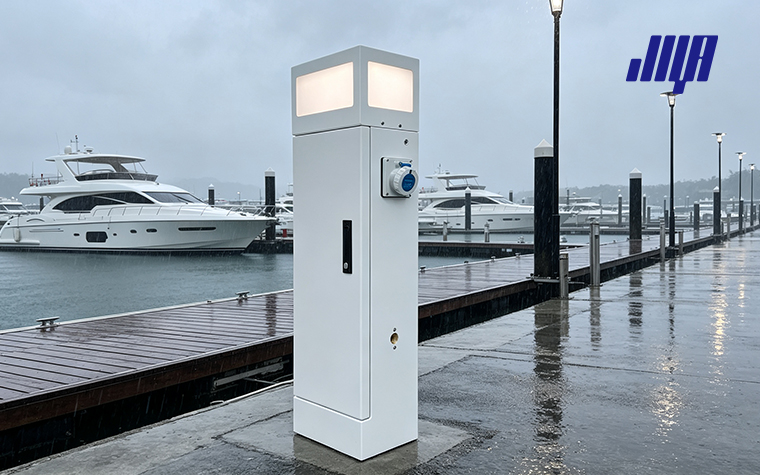
Factors to Consider: Size and Climate
The selection of a power pedestal is governed by the size and climate of the locality to ensure proper functionality and long life. The size should be commensurate with the dock or marina-specific power requirements. For instance, in an average scenario, a power pedestal for a marina might be required to accommodate 30-amp or 50-amp circuits, whereas the larger vessels normally require pedestals that provide 100-amp or even 480-volt three-phase power. By selecting a power pedestal based on current and projected future needs, one minimizes expensive upgrading later on. Climate greatly influences the durability of the pedestal. In areas with heavy rain, saltwater exposure, or freezing temperatures, the power pedestals have to be corrosion-resistant and made from marine-grade materials, such as stainless steel or UV-resistant plastic.
Also, surge protection may be considered if the area is exposed to lightning storms or frequent voltage fluctuations, which certainly help in protecting the equipment connected to it. In hot climates, for instance, the pedestal should be equipped with cooling or ventilation to protect internal components from overheating. So, when all environmental considerations and electrical needs have been accounted for, an operator should choose a pedestal that enhances operational efficiency, minimizes maintenance costs, and favors unhindered smooth operations over time.
Budgeting for Your Dock Power Needs
Estimating power requirements for your dock is a critical exercise in assessing the specific electrical demands of the vessels and equipment that will dock there. Begin by listing the electrical devices, down to the light in some cases, and their energy consumption-right down to refrigeration, air conditioning, and chargers-to provide for the combined energy consumption used by the dock power needs. This capacity, expressed in amperage, is thereby required by the electrical pedestal of the dock to run the circuits without an over-load. Consider also the possible installation costs for the power distribution infrastructure. The price includes pedestals and wiring to breakers and every other component necessary for compliance with the safety regulations and adaptation to environmental conditions. The longer the wiring, the costlier the installation will be, more so if it involves arranging an isolated dock in an area subjected to adverse weather conditions. Consider labor costs for the installation if you cannot do it yourself. And finally, consider operational costs down the road on maintenance and electricity. Energy-efficient pedestals or those with smart metering features may help reduce electricity bills by tracking energy wastage and cutting it down. It would be wise to have a contingency budget for unplanned repairs or future upgrades. Allowing and planning for these will make sure your dock operations have a cost-effective and uninterrupted power supply.
Specific User Requirements and Preferences
When looking for the ideal power pedestal for a dock, durability, functionality, and dock-set compatibility come into mind. Users often tend to prioritize features, keeping in mind how they are going to use the pedestal: multiple power outlets, some lighting, and perhaps weatherproof materials to endure heavy environmental conditions. Alongside, flexible customization options like additional sockets or USB ports get favored in meeting diverse types of power demand. Energy efficiency and smart technologies are becoming more popular by the day among dock owners. On an operational level, smart metering-capable pedestals that can reduce operational costs and carbon footprints will be apt for your dock. Such features perform a first-hand measurement of the energy consumed and thus allow the owner to optimize energy consumption. Further, LED lighting is favored by owners because of their long life and energy efficiency compared to conventional lighting. Another important feature usually demanded by the users includes such features as easy installation and maintenance. These pedestals with modular designs allow quick installation and even the replacement of parts and put the dock system to halt for a short while when undergoing repairs. Also, it is best to look for a unit that has an excellent after-sales service that includes warranty or guarantee and customer support that is easy to reach and familiar with the product to ensure long-term demand satisfaction and constant dock operation.
Future Trends in Marina Power Solutions
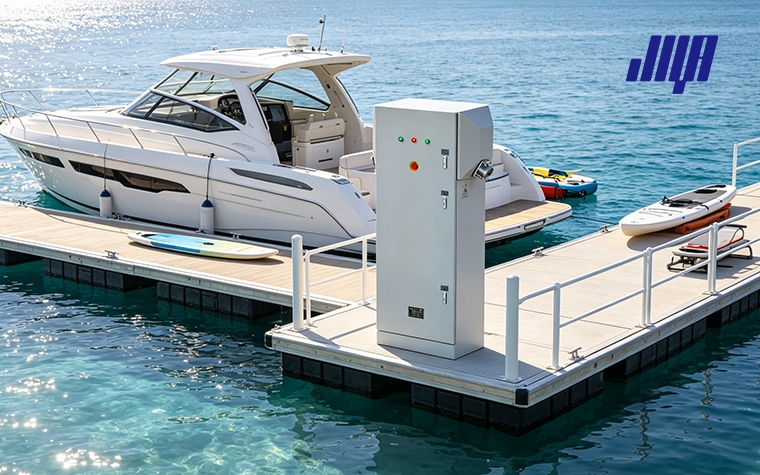
Technological Advancements in Power Pedestals
The emerging concept of power pedestals has posed a serious challenge and created a conflict with the functionality and reliability of marina power systems. Presently, power pedestals contain smart technology, which allows them to be remotely monitored and controlled. This possibility allows operators in marinas to check energy use, detect faults, and, if necessary, redistribute power more effectively through mobile or web-based applications. A downside appears to be a reduction in downtime. Hence, optimally serving the users. On the other side, energy efficiency is another area where power pedestals are trying to evolve. In many of the contemporary designs, LED lights, solar panels, and an energy management system are present to consume a minimum power amount with the aim of lessening environmental degradation. This helps from a sustainability perspective and also slashes energy costs for marinas. Hence, such features make the power pedestal one of the cornerstones in green marina infrastructure. Power pedestals have also kept on evolving in the area of safety. Today, the best units come equipped with ground fault protection, surge suppression, and the use of weather-resistant materials to ensure they operate reliably even in the test of a rough marine environment. In addition, these advanced power pedestals comply with strict industry standards and certifications, giving reassurance to marina operators as well as the boaters that depend on them. Altogether, these innovations begot a smarter, safer, and sustainable marina power future.
Smart Technology Integration
Smart technology integration in the power systems of marinas is altering the functioning of marinas and how boaters interrelate with greater services. These sophisticated systems get remote monitoring and remote control features into the operators’ hands to manage energy usage efficiently and spot a developing problem before it escalates into an issue. This proactive approach maximizes uptime while minimizing overall maintenance costs. With smart technology on the power pedestals in the marinas, another key function is real-time energy consumption monitoring. This transparency assists the marina operators on energy distribution optimization and allows the boaters to monitor their power usage and subsequently make choices to reduce waste or cost. Moreover, a lot of these modern systems provide connectivity through mobile apps to access this key information, such as energy usage, wherever one is with the convenience of a selection. Increased safety and security is another big plus of the smart technology. Integrated sensors detect potential hazards including electrical faults or unauthorized access, alerting operators immediately. Some systems also have shutoffs that kick in automatically to stop accidents and keep the marina infrastructure and users safe. Together, these smart functionalities lead to a more reliable, user-friendly, and greener marina environment.
Design and innovation of the dock power base
The dock power base design has seen much advancement, with the intent to offer the best technology to meet the growing needs of today’s marinas. One of the foremost considerations for modularization was customization ability along with ease of scaling up. This enables marina operators to address their changing energy needs: either to increase capacity for more craft or to update it to include an alternative source of energy such as solar or wind power. In line with the advancement of smart technology, the dock power base has also been innovated. Most systems are now capable of monitoring energy consumption, voltage level, and fault incidence in real-time. An example would be smart meters calculating electricity used per dock, which produces data that can simplify billing and adhere to sustainable working methods.
The aforementioned dock power bases are among the most durable from the modern-day dock power base standpoint. Built with corrosion-resistant materials such as stainless steel or marine-grade aluminum, these modern dock power systems are constructed to endure the extreme environmental conditions of being out in the open, including salt-laden winds, heavy humidity, and temperature extremes. Other dock power base design features include weatherproof casings that guarantee continuous operation even amidst storms. Stepping on sustainability, developers have seen to it that another area of development for the dock power base is the support for charging stations for electric boats, further indicating the green shift in boating. These innovations thus contribute toward higher operational efficiency and a better user experience for marina clients. With docking power bases leveraging the latest technology and sustainability-focused design, this marks docking power bases emergence in setting a new paradigm of safety, adaptability, and concern toward the environment in marina management.
Frequently Asked Questions (FAQ)
Q: What do you understand by marina power pedestals?
A: Marina power pedestals are the electrical units required at the docks for providing power and connectivity to boats and other marine applications. They normally have several shore power receptacles, by way of which a boat owner can simply access electricity for his onboard systems.
Q: How are power pedestals able to resist harsh marine environments?
A: Power pedestals are designed to resist harsh marine environments by having high-pressure injection-molded cases. This construction keeps the inner components safe from saltwater, moisture, and other harmful elements so that they remain reliable for long years.
Q: What are the types of pedestal models available?
A: Different models of pedestals exist, including those from Eaton, each capable of serving power distribution needs and accommodating various electrical hookups to delivery the right power to a wide variety of vessels.
Q: Why are marine power pedestals important for the marina owners?
A: These marine power pedestals are important to marina owners because they give the boaters access to the power. This makes it a more desirable facility for the potential customer, and also, they facilitate smooth operation of electrical systems by the vessels.
Q: Can dock boxes be connected to the power pedestals?
A: Yes, dock boxes can be connected with power pedestals to create a total power distribution system. Dock boxes provide a fine solution for dock accessory storage while granting electrical connections for the boats.
Q: What kinds of electrical hookups could power pedestals provide?
A: Power pedestals, in general, provide multiple electrical hookups, comprising 30-amp and 50-amp receptacles, giving a broad range of power choices suitable for smaller to bigger boat sizes and power requirements; it is this flexibility that respects the spectrum of smaller crafts to larger boats.
Q: How do I decide which pedestal is right for my needs?
A: A perfect pedestal can be found depending on the size of your boat, the type of electrical connections required, and the particular features you want, like the inclusion of boat dock lighting or cable TV connections. Usually, marina electrical equipment specialists can help you locate a solution that works.
Q: What kinds of dock lighting are available with power pedestals?
A: Dock lighting enhancements for safety and visibility at night come with many power pedestals. Having such a system in place adds convenience to rental boat docks and increases the overall efficiency of the marina.
Q: How can one monitor the energy consumption of power pedestals?
A: Some modern power pedestals incorporate meter reading facilities so that the owners of marinas can keep track of energy usage with greater accuracy. This would help in cutting the expenses and also in assuring that every user who uses that power is charged for the consumption.
References
-
University of Alaska Southeast – Ports, Harbors & Marinas: Discusses the delivery of electrical power to marina facilities and shore pedestals, including the importance of grounding. View Source
-
United States Naval Academy – Orientation to the Navy 44: Provides insights into the use of shore power and safety considerations related to marina power pedestals. View Source
-
UCLA Career Center – Cottage Facilities Intern at Indian River Marina: Highlights the inspection and maintenance of marina power pedestals as part of marina management responsibilities. View Source

About the Author
Boda Pan
Engineer, JIYA Intelligent
Boda Pan is an engineer at JIYA Intelligent with five years of experience in outdoor power distribution. He specializes in RV power pedestals, water and power pedestals and marina water and electric pedestals, with a focus on IEC standards compliance.